28° and Clear

NJ Governor Signs Executive Orders to Ease Impact of June 1 Utility Rate Hike


With electricity bills set to rise up to 20%, New Jersey calls on utilities to delay costs, expand protections, and accelerate clean energy programs
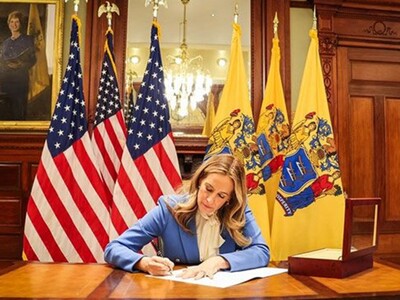
NEW JERSEY — May 14, 2025 — Governor Phil Murphy and the New Jersey Board of Public Utilities (NJBPU) unveiled a multi-pronged affordability strategy today aimed at reducing the impact of steep electricity rate increases scheduled to take effect on June 1, 2025. The measures call on the state’s four investor-owned electric utilities to implement cost mitigation plans and expand customer protections during the high-demand summer season.
“New Jersey ratepayers are preparing for an unprecedented increase in utility costs,” said Governor Murphy. “While the utilities are not responsible for the rate increases, they have a responsibility to protect ratepayers. It’s clear that New Jersey’s four hometown electric utilities need to deliver more reasonable options. We ask that utilities share the load and commit to being part of the solution to the PJM cost crisis. These utilities have reaped billions in profits over the last ten years. My Administration will continue to identify and put all options on the table to mitigate rate increases."
Following a May 7 deadline, the NJBPU received proposals from Public Service Electric and Gas (PSE&G), Jersey Central Power & Light (JCP&L), Atlantic City Electric, and Rockland Electric Company. These proposals were mandated by the Board to include deferral mechanisms that shift higher summer bills into lower-usage months, among other stabilization strategies.
The expected rate hike, driven in part by regional capacity market conditions under PJM Interconnection’s 2024 auction and New Jersey’s 2025 Basic Generation Service auction, will raise average customer bills by 17.23% to 20.20%, depending on the service area.
To address the sharp increase, Governor Murphy is urging utilities to voluntarily adopt additional consumer protection measures. These include expanding the Winter Termination Program—which currently protects customers from shutoffs between November and March—into the summer months, as JCP&L has proposed, and suspending reconnection fees during peak usage periods.
In parallel, the NJBPU has been directed to accelerate several initiatives:
-
Open new competitive solar and community solar energy solicitations by year’s end, increasing access to renewable energy with guaranteed savings for participants.
-
Initiate a new proceeding on resource adequacy, examining how best to meet future energy demand while maintaining affordability and evaluating New Jersey’s continued participation in PJM’s capacity market.
-
Assess the impact of data center expansion on demand growth, which could contribute to rising capacity prices and utility costs for consumers.
The Board has also expanded access to financial assistance programs. Last year, more than 455,000 households received $295 million in energy aid. The Residential Energy Assistance Payment (REAP) initiative alone delivered over $48.7 million in one-time credits. A second REAP installment was approved on April 23, 2025.
Additionally, the Board released a proposal to strengthen the Universal Service Fund (USF), which supports households earning up to 60% of the state median income—approximately $92,000 for a family of four—by enhancing bill credits and requiring proactive utility enrollment efforts.
Efforts to reduce long-term costs include increasing access to community solar. Since its launch, the Community Solar Energy Program has delivered more than $7 million in net savings across 28,000 subscribers. The next 250-megawatt block is expected to broaden this impact.
The Board also launched the third Competitive Solar Solicitation for grid-scale development. Last year’s auction brought over 300 megawatts of the state’s lowest-cost solar to date. Clean energy, particularly solar and wind, has contributed significantly to keeping electricity prices in check. Without clean energy contributions to PJM’s 2024 auction, capacity prices could have been 60% higher, potentially costing New Jersey an additional $1.1 billion.
To further address long-term generation needs, the NJBPU is investigating advanced nuclear technologies through a new Request for Information, while also continuing its statewide energy efficiency programs. These programs have saved customers over $600 million to date and continue to reduce demand and lower capacity-related costs.
Residents facing hardship are encouraged to seek assistance from programs such as the Universal Service Fund, Fresh Start, PAGE, LIHEAP, Lifeline, NJ Shares, and Comfort Partners. More details are available on the NJBPU website under the “Assistance Programs” section.
Governor Murphy emphasized the administration’s commitment to ensuring that all ratepayers can maintain energy access amid a volatile pricing environment.