53° and Sunny



Image

Two laws signed in Gov. Phil Murphy’s final days require cursive instruction in grades 3–5 and direct every district to restrict non-academic cell phone use starting in the 2026–27 school year.
NEW JERSEY — In the final stretch of his second term, former Gov. Phil Murphy signed two bipartisan education measures that aim to pull New Jersey classrooms in a more analog direction, one by reviving cursive handwriting lessons for elementary students and the other by moving the state toward “phone-free” school days for K–12 students.
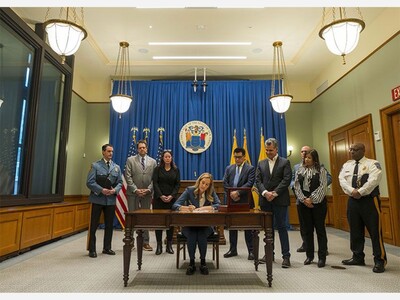
Murphy signed the phone restriction bill on Jan. 8, 2026, during a visit to Ramsey High School in Bergen County. The law requires the New Jersey Department of Education to issue statewide guidelines and compels local boards to adopt policies restricting student use of cell phones and other internet-enabled devices, with implementation beginning in the 2026–27 school year.
“By removing cell phones from New Jersey schools, we are ensuring our classrooms are a place for learning and engagement, not distracting screens that detract from academic performance,” said Governor Phil Murphy. “We are reaffirming our commitment to youth mental health, while providing the resources our education community needs to seamlessly implement phone-free policies in the upcoming school year.”
On Jan. 19, 2026, Murphy signed a separate measure requiring school districts to incorporate cursive handwriting instruction into curricula for grades 3 through 5, beginning with the next full school year after enactment.
“By guaranteeing that all students have a solid background in cursive handwriting, we are giving them a valuable skill they will use throughout their lives - whether it’s signing a check or interpreting an important document,” said Senator McKnight (D-Hudson). “Not only does handwriting instruction encourage better retention and comprehension of information, but it also allows our students to build self-confidence and maintain a vital connection to written communication in the increasingly digital age.”
Murphy left office when Mikie Sherrill was sworn in as New Jersey’s 57th governor on Jan. 20, 2026, leaving the rollout and enforcement details largely to state education officials and local districts now operating under the new laws.
The cursive measure, S1783/A3865, directs school districts to add cursive handwriting instruction for students in grades 3–5 and to use activities and materials designed to help students become proficient in reading cursive and writing legibly in cursive by the end of fifth grade.
The law took effect immediately and applies beginning with the “first full school year” after enactment, meaning districts must incorporate it starting in the next full academic year cycle.
State officials framed the change as part of a broader national swing back toward handwriting skills after cursive fell out of many school curricula following the 2010 rollout of Common Core standards, which did not explicitly require cursive instruction.
The phone law, S3695/A4882, does not create a single statewide enforcement system. Instead, it sets up a two-step structure:
State guidelines: The Commissioner of Education must issue K–12 guidelines on student use of internet-enabled devices during school hours, on school buses, and at school-sanctioned events. The guidelines are due no later than 90 days after the law’s effective date.
Local policies: Every board of education, charter school trustee board, and renaissance school project board must adopt a policy consistent with those guidelines, effective beginning in the 2026–27 school year.
At minimum, the guidelines must prohibit non-academic use of an internet-enabled device on school grounds during the school day, while also requiring alignment with state and federal disability accommodations and student health plans.
The statute also builds in specific exceptions and authorized-use scenarios, including emergencies or perceived threats, certain health-related needs with documentation, translation services, and case-by-case approvals for defined circumstances such as student caregivers.
Both measures were signed during New Jersey’s transition period between administrations, but each reflects policy debates that had been building for years: how much of the school day should be device-free, and which foundational skills still matter in a digital-first era.
For the phone restrictions, New Jersey joined a fast-growing national wave of states adopting statewide limits on student phone use, with the Associated Press reporting that, including New Jersey, 37 states and Washington, D.C. have laws or rules limiting phones and other devices in schools, though the scope and enforcement vary widely by state.
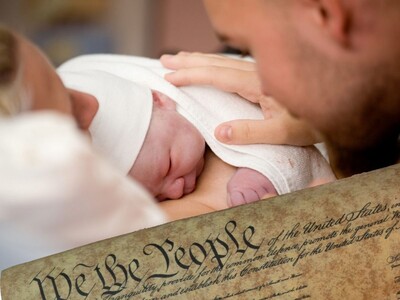
For cursive, the state is effectively reversing an instructional retreat that accelerated after Common Core, with proponents arguing that students still need to read historical documents and develop handwriting fluency, while districts retain discretion over lesson design and classroom time allocation within the grade-band requirement.
For parents and educators in Morris County and statewide, the key near-term development is the Department of Education’s guidance on phone restrictions, since the law requires local districts to align their policies with the state framework while managing practical questions such as storage (pouches, lockers), enforcement consistency, and accommodations for students with documented needs.
On cursive, districts will need to decide how to fit handwriting instruction into existing literacy blocks and how they will measure proficiency by the end of fifth grade, as required in the statutory language.
Bring Meaning Back to the News: Go to TheMinuteman.org to get simple explanations of the trending topics in the news.



Partly Cloudy , with a high of 84 and low of 43 degrees. Overcast during the morning, sunny for the afternoon, clear in the evening,