45° and Clear
Image
Following decades of legal and legislative battles over affordable housing, 94% of New Jersey towns have now submitted plans under a landmark new law, signaling a broad shift in state housing policy and local compliance.



New Jersey has marked a significant milestone in the ongoing effort to ensure equitable access to affordable housing. As of June 30, 2025, a record 424 municipalities have adopted Housing Element and Fair Share Plans (HEFSPs) as part of the state’s “Fourth Round” of affordable housing obligations, in compliance with a new framework established under law A4/S50.
The robust participation, comprising 94% of the 452 municipalities that committed to the process, represents the highest engagement in the 50-year history of the Mount Laurel Doctrine—a legal principle mandating that every municipality in the state provide its “fair share” of affordable housing.
“It’s encouraging to see so many towns stepping up to build the affordable homes New Jersey urgently needs,” said Adam Gordon, Executive Director of Fair Share Housing Center. “This shows the new law is working — cutting red tape, lowering costs, and getting more towns involved."
New Jersey’s approach to affordable housing is shaped by the Mount Laurel cases, beginning with a 1975 New Jersey Supreme Court decision that found exclusionary zoning unconstitutional. The doctrine was reaffirmed and expanded in a 1983 ruling (Mount Laurel II), which compelled municipalities to not only allow but actively plan for affordable housing.
The state attempted to institutionalize these rulings with the creation of the Council on Affordable Housing (COAH) in the 1985 Fair Housing Act. However, COAH became defunct in 2015, after years of political deadlock. As a result, responsibility for overseeing municipal compliance shifted to the judiciary.
This decentralized, court-led system led to a cumbersome Third Round process (2000–2015), during which many municipalities resisted or delayed compliance. For example, Princeton’s housing obligation was not resolved until 2018 after a 41-day trial and a formal plan was not adopted until 2020.
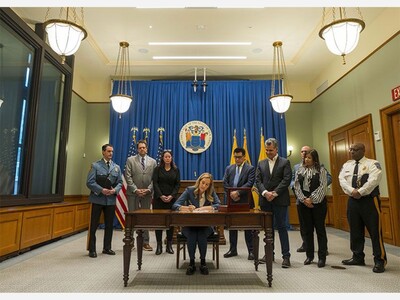
To streamline and codify the affordable housing process, Governor Phil Murphy signed legislation A4/S50 into law in March 2024. The law was a bipartisan effort supported by legislative leaders across both houses. It eliminated COAH, instituted a court-run Affordable Housing Dispute Resolution Program, and introduced new standards for determining municipal obligations.
The law also expanded municipalities’ options for compliance, including provisions for 100% affordable housing, mixed-income developments, supportive housing, and redevelopment of vacant sites such as offices and malls. Additionally, the law mandates greater transparency, requiring that all municipal plans be publicly accessible online.
Notably, the new law codifies the methodology used to determine housing obligations for the Fourth Round, offering towns more clarity and autonomy in deciding how to meet those requirements. Each municipality’s fair share is determined based on factors such as job growth, existing affordability, and demographic shifts in low- and moderate-income households.
“When I signed A4/S50, I did so to honor the promise of the Mount Laurel Doctrine and ensure that more hardworking families have access to a quality, affordable place to call home,” said Governor Phil Murphy. “It is promising to see that 94 percent of the 452 municipalities that committed to this legislation have adopted fair share plans on time. I am grateful to the Fair Share Housing Center for their continued analysis and advocacy, helping to keep New Jersey on track to meet our affordable housing goals."
Despite widespread participation in the new affordable housing framework, a vocal group of municipalities continues to resist its implementation. In September 2024, nine towns—including Denville, Florham Park, and Montville in Morris County—filed a lawsuit in the New Jersey Superior Court challenging A4/S50. The complaint alleged that the law was an unconstitutional, unfunded mandate and that it improperly shifted authority from the executive to the judiciary.
Parsippany-Troy Hill's Mayor James R. Barberio said in a statement on joining the litigations that, "The current law only benefits developers. It imposes excessive mandates on municipalities without fully considering local conditions and resources or ways to help address the costs associated with the development. As it stands, our taxpayers have to cover all of the costs for the entire building of additional infrastructure, impacts to schools, to police and public safety, etc."
This group, now organized as the Local Leaders for Responsible Planning (LLRP), expanded to include 29 municipalities from across the state, spanning Bergen, Morris, Essex, Hunterdon, Monmouth, Passaic, Salem, and Somerset counties. The coalition argues that the law unfairly burdens suburban municipalities by requiring them to develop more housing, while exempting certain urban centers such as Trenton and Passaic.
In April 2025, while their original lawsuit was still pending, the LLRP escalated the matter by filing a second challenge in the United States District Court for the District of New Jersey. This federal lawsuit alleges that the state’s affordable housing law violates the Equal Protection Clause of the U.S. Constitution, contending that it discriminates against suburban towns by imposing disproportionate development requirements compared to urban municipalities that can meet their obligations primarily through housing rehabilitation.
Shortly afterward, on July 1, 2025, Superior Court Judge Robert Lougy issued a ruling on the state-level case. He rejected the LLRP’s request to suspend implementation of key provisions of the law, thereby allowing the planning process to continue. However, Judge Lougy did clarify one important point: municipalities are only required to submit their Housing Element and Fair Share Plans to the Fair Share Housing Center (FSHC) if they have entered into a settlement agreement related to their Fourth Round obligations. This decision offered a partial concession to the plaintiffs but preserved the overall structure and timeline of the housing mandate.
Meanwhile, the Fair Share Housing Center maintains that the process is proceeding as intended. Their analysis shows that 94% of the 452 municipalities that opted into the Fourth Round have submitted fair housing plans on time—an approximately 25% increase in participation compared to the prior round. FSHC emphasizes that these results show towns are largely working within the framework of the new law to meet their constitutional obligations under the Mount Laurel Doctrine.
The ongoing legal battle thus reflects a sharp divide in narratives. The LLRP asserts that the law imposes excessive and unequal mandates, while housing advocates view the widespread compliance as evidence that the streamlined process is working. As of mid-2025, both the administrative and legal phases remain active. Interested parties have until August 31, 2025, to challenge submitted municipal plans, and any disputes must be resolved by March 2026, per the state’s Affordable Housing Dispute Resolution Program.
Affordable housing development in New Jersey has long been hampered by restrictive zoning policies, particularly in affluent suburbs. Research from legal scholars like Stewart E. Sterk (Mack Professor of Law at the Benjamin N. Cardozo School of Law of Yeshiva University in New York City) highlights how local land-use regulations—such as large-lot zoning and bans on multifamily housing—limit housing supply, raise costs, and perpetuate racial and economic segregation.
These exclusionary practices have significant social implications, including restricting access to high-performing schools and limiting upward mobility. Sterk and others argue that while litigation under the Fair Housing Act has been used to combat these practices, incentive-based state policies, such as those in New Jersey and Massachusetts, have proven more effective in producing tangible housing outcomes.
Municipalities now face a critical phase in the compliance timeline. Interested parties have until August 31, 2025, to challenge submitted plans. Any disputes must be resolved through the state’s Dispute Resolution Program by December 31, with final adoption and necessary zoning changes due by March 15, 2026.
Some towns, such as Princeton, have emerged as exemplars of timely and forward-thinking planning. Princeton’s Fourth Round submission focuses on reusing vacant office spaces and promoting smart growth near transit and job centers—strategies that reduce sprawl and support inclusive neighborhoods.
“Princeton’s plan is about more than meeting a legal mandate: it reaffirms our commitment to enhancing racial and socioeconomic diversity through inclusive development, while strengthening the fabric of our community,” said Princeton Council President Mia Sacks
Over the past five decades, the Mount Laurel Doctrine has facilitated the development of more than 75,000 affordable units in New Jersey, including over 25,000 since 2015. These homes currently house over 400,000 residents.
The Fourth Round, launched officially on July 1, 2025, aims to expand that impact further. With a more efficient system and broad municipal buy-in, housing advocates are optimistic that New Jersey is poised for a significant expansion in affordable housing stock over the next decade.



Sunny, with a high of 58 and low of 30 degrees. Sunny in the morning, clear during the afternoon and evening,