29° and Clear
Image
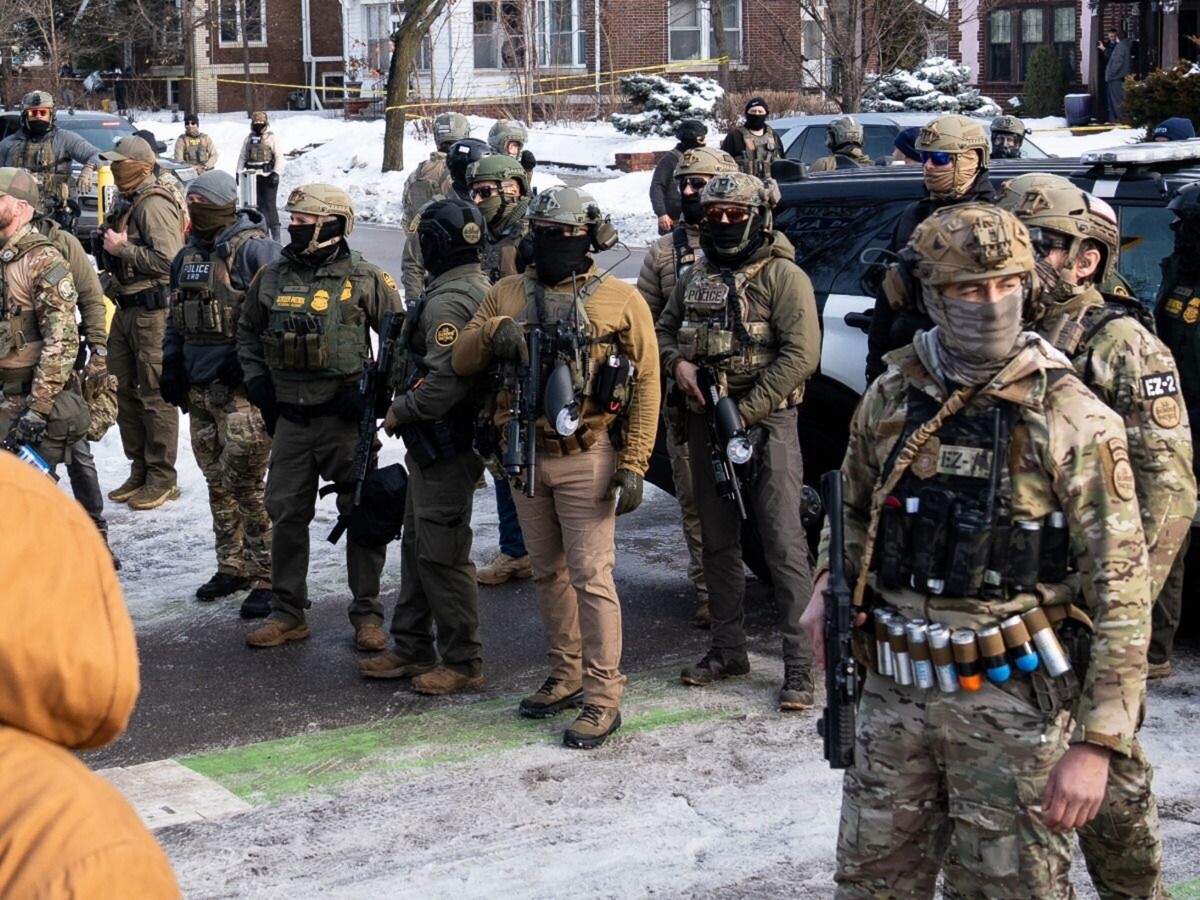
The newly introduced bill would let people sue over alleged constitutional violations during civil immigration enforcement, while leaving qualified immunity intact.



New Jersey lawmakers have introduced a bill with an attention-grabbing acronym that would expand the ability of people in the state to bring civil lawsuits over alleged violations of the U.S. Constitution during civil immigration enforcement operations.
The proposal, Assembly Bill A4446, is formally titled the Fight Unlawful Conduct and Keep Individuals and Communities Empowered Act. It was introduced Feb. 24, 2026, sponsored by Assemblywoman Katie Brennan and Assemblyman Ravi S. Bhalla, both Democrats representing District 32 (Hudson County).
According to legislative summaries, the measure would:
Further limit when local police may notify federal immigration officials about the release of individuals from custody.
Restrict the sharing of certain non-public information with federal immigration agencies.
Bar state and local resources from being used to assist in civil immigration enforcement activities beyond what is required under federal law.
Establish additional oversight and reporting requirements regarding interactions between state agencies and federal immigration authorities.
Allow individuals to bring civil lawsuits against agents conducting immigration enforcement if the agent engages in conduct that violates the Constitution
Under current New Jersey policy, local law enforcement may cooperate with federal immigration officials in cases involving serious criminal charges or convictions. The proposed legislation would seek to reinforce those boundaries and clarify areas where cooperation is either permitted or prohibited.
At the center of A4446 is a new right to sue in state court. The bill says “any person may bring a civil action” against someone who, “while conducting civil immigration enforcement,” knowingly engages in conduct that violates the U.S. Constitution.
If a person prevails, the bill states they would be entitled to monetary damages that can include punitive damages, damages for psychological or physical harm, as well as reasonable attorney’s fees and costs, plus any equitable or declaratory relief available under law.
The bill also lists factors a court should consider when weighing punitive damages in cases involving someone acting “under color of” federal or state law. Those include whether the person:
wore a facial covering,
failed to identify themselves as law enforcement (including by insignia or by providing name and identification number),
failed to wear or use a body-worn camera when required by law, regulation or policy,
used a vehicle without a license plate or with an out-of-state plate,
used crowd control equipment, or
intentionally violated a relevant court order or consent decree.
A4446 defines several of those terms in the bill text, including “facial covering” and “crowd control equipment.”
The bill explicitly states that qualified immunity “shall be a defense” to liability under the act.
Qualified immunity is a legal doctrine that can shield government officials from civil liability in certain circumstances, and it is frequently a central issue in civil rights litigation.
According to legislative tracking, A4446 has been introduced and referred to the Assembly Oversight, Reform, and Federal Relations Committee. A companion measure, S3711, is proposed in the Senate.
The bill must advance through committee hearings before receiving votes in the full Assembly and Senate. Lawmakers may amend provisions during that process. If passed by both chambers, it would require the governor’s signature to become law.
Public hearings are expected to draw testimony from immigrant advocacy organizations, law enforcement representatives, civil liberties groups, and municipal officials.
Courts have previously examined the boundaries between federal immigration authority and state autonomy. Under the Tenth Amendment to the U.S. Constitution, the federal government cannot compel states to enforce federal regulatory programs. However, states also cannot interfere with federal enforcement efforts.
As drafted, the legislation seeks to define how New Jersey agencies may engage with federal authorities without obstructing federal operations. Any final law would likely be scrutinized for compliance with federal statutes and constitutional limits.
The introduction follows heightened debate in New Jersey over federal immigration enforcement tactics and how state and local governments should respond. A New Jersey Assembly Democrats press release tied a package of immigration-related proposals to an incident described as the detention of 10 people near a light rail station on the Hoboken–Jersey City border, among other concerns about masked agents and unmarked vehicles.
Separately, legislative Democrats have publicly described a broader slate of proposals aimed at limiting or discouraging certain immigration-enforcement practices in the state, including measures dealing with private detention facilities and restrictions on access to crime scenes.
Although the bill’s sponsors represent Hudson County, A4446 would apply statewide. For residents in Morris County, the practical question is how often civil immigration enforcement intersects with everyday public spaces, workplaces, transit hubs, and local policing, and what legal options people have if they believe a federal officer violated constitutional protections during an enforcement action.
If enacted, A4446 would not change federal immigration law itself, but it would attempt to create a state-law pathway for lawsuits tied to alleged constitutional violations during civil immigration enforcement, with damages and attorney’s fees available to prevailing plaintiffs.
Bills that target or regulate federal enforcement activity often raise questions about the boundary between state authority and federal authority, including arguments rooted in the U.S. Constitution’s Supremacy Clause. In recent weeks, the U.S. Department of Justice has also signaled willingness to litigate New Jersey’s immigration-enforcement restrictions, announcing a lawsuit related to the state’s approach to ICE access on certain state property.
A4446’s future will depend on committee action, possible amendments, and whether it advances through both legislative chambers.
Bring Meaning Back to the News: Go to TheMinuteman.org to get simple explanations of the trending topics in the news.



Sunny, with a high of 52 and low of 26 degrees. Sunny in the morning, clear in the afternoon and evening,









idiotic, follow the federal law. These are not made up laws, they were passed by Congress.