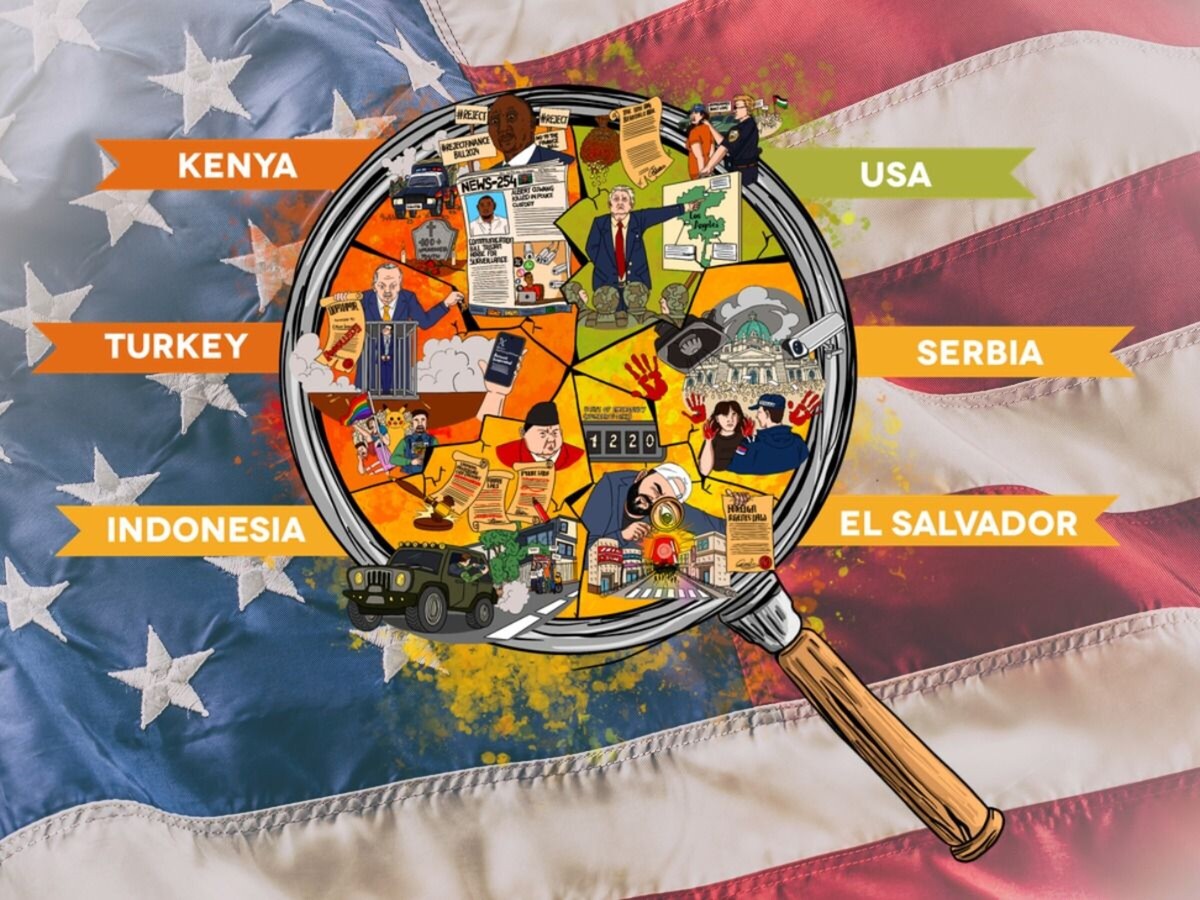
CIVICUS Monitor cites military deployments against protests, restrictions on journalists, funding cuts to civil society, and targeting of Palestine advocates as signs of democratic backsliding under President Trump's 2nd term [Graphic by CIVICUS Monitor]
The United States remains on the CIVICUS Monitor Watchlist following what the organization describes as sustained attacks on civic freedoms during the first six months of President Donald Trump’s second term. The global civil society alliance cited military interventions against peaceful protests, legal and financial restrictions on nonprofit organizations, aggressive targeting of journalists, and reprisals against foreign-born advocates for Palestinian rights as indicators of democratic erosion.
CIVICUS Secretary General Mandeep Tiwana stated, “The United States appears to be sliding deeper into the quicksands of authoritarianism. Peaceful protests are confronted with military force, critics are treated as criminals, journalists are targeted, and support for civil society and international cooperation have been cut back.”
The U.S., once widely regarded as a global advocate for democratic freedoms, now joins Kenya, El Salvador, Indonesia, Serbia, and Turkey on the latest watchlist. CIVICUS categorizes the country’s civic space as “narrowed,” meaning that while constitutional freedoms formally exist, violations occur with increasing frequency.
Military Deployed Against Peaceful Demonstrations
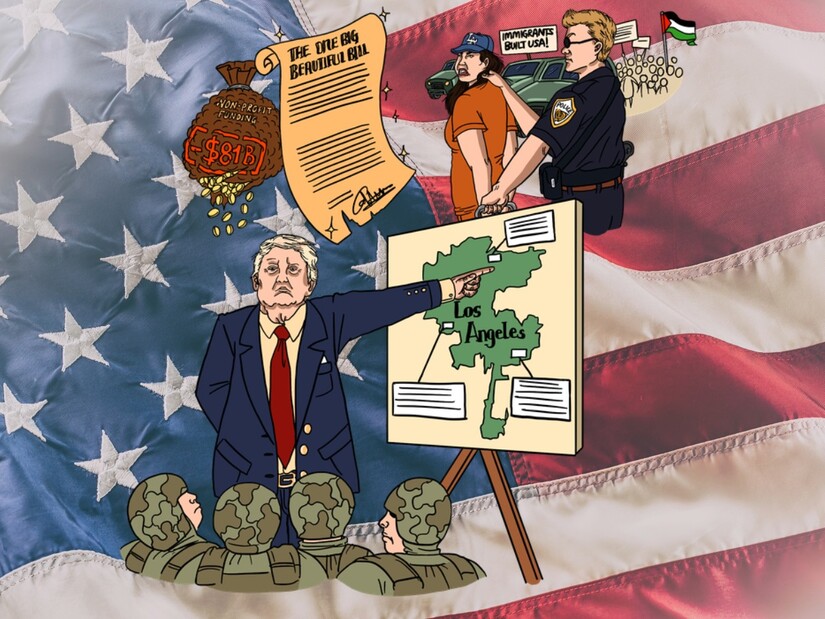
Since early June 2025, protests have erupted across major U.S. cities in response to Immigration and Customs Enforcement (ICE) raids targeting undocumented immigrants. Authorities have arrested at least 350 demonstrators in Los Angeles, San Francisco, Austin, New York, and Dallas.
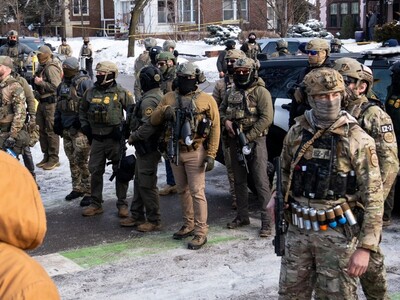
On 7 June, President Trump ordered the deployment of 700 Marines and 2,000 National Guard troops to Los Angeles to suppress anti-ICE demonstrations. Tiwana described the action as “a preferred tactic of despots around the world,” warning that such militarization sets “a dangerous precedent” incompatible with democratic norms.
[Graphic by CIVICUS Monitor]
Journalists Face Violence and Arrests
Journalists covering the protests have been subjected to violence and arbitrary detention. On 9 June, Australian journalist Lauren Tomasi was shot with a rubber bullet while reporting on protests in Los Angeles. Days later, Salvadoran journalist and U.S. legal resident Mario Guevara was detained while livestreaming an anti-Trump protest in Georgia. Despite identifying himself as press, Guevara was charged with obstruction and unlawful assembly and transferred to ICE custody, where he remains.
Congressional actions have also affected press freedom. On 18 July, Republican lawmakers approved a rescission package cutting USD 1.1 billion from the Corporation for Public Broadcasting, threatening the future of PBS, NPR, and local stations. According to CIVICUS, this marks the first rollback of pre-approved public funding for public media in nearly three decades.
Trump has further pursued lawsuits against major outlets, including ABC, CBS, the Des Moines Register, and The Wall Street Journal, in what CIVICUS describes as an attempt to silence criticism and investigative reporting.
“The targeting of journalists for documenting dissent while defunding public media is a clear red flag,” Tiwana said.
Legal Restrictions and Funding Cuts to Civil Society
State-level laws in Arkansas and Nebraska now require nonprofits receiving international funding to register as foreign agents. Florida has imposed new limits on nonprofit fundraising. Nebraska’s “Foreign Agent and Terrorist Agent Registration Act,” set to take effect in October, will impose broad registration requirements on organizations linked to countries designated as foreign adversaries.
On 4 July, Trump signed the “One Big Beautiful Bill Act,” which cuts nonprofit funding by an estimated USD 81 billion over the next decade. The same legislative package also slashes billions in foreign aid.
Tiwana warned that “harsh moves to defund and hobble nonprofits amid ongoing culture wars will negatively impact some of the neediest and most excluded people in the United States and abroad.”
Crackdown on Palestine Advocacy
CIVICUS also cited increased reprisals against activists supporting Palestinian rights, particularly foreign-born student advocates such as Mahmoud Khalil, Mohsen Mahdawi, and Rumeysa Ozturk. The Trump administration’s sanctioning of Francesca Albanese, UN Special Rapporteur for Human Rights in the Occupied Palestinian Territories, was described as an attempt to silence international criticism.
“We are seeing a wide-ranging attack on civic space in the US by the federal and some state governments,” Tiwana said, calling for a reversal of policies that undermine First Amendment freedoms.
Background on CIVICUS and Civic Space Ratings
The CIVICUS Monitor tracks freedoms of expression, association, and peaceful assembly across 198 countries and territories, assigning ratings ranging from “closed” to “open.” The United States’ “narrowed” rating is the second-highest tier, shared by 42 countries worldwide.
The latest watchlist highlights what CIVICUS views as an accelerating shift away from democratic norms in the U.S., a country historically regarded as a global advocate for civic freedoms. The organization urges U.S. authorities to restore protections for protest, press freedom, and civil society participation to ensure compliance with constitutional principles.
 32° and Partly Cloudy