37° and Clear
Image
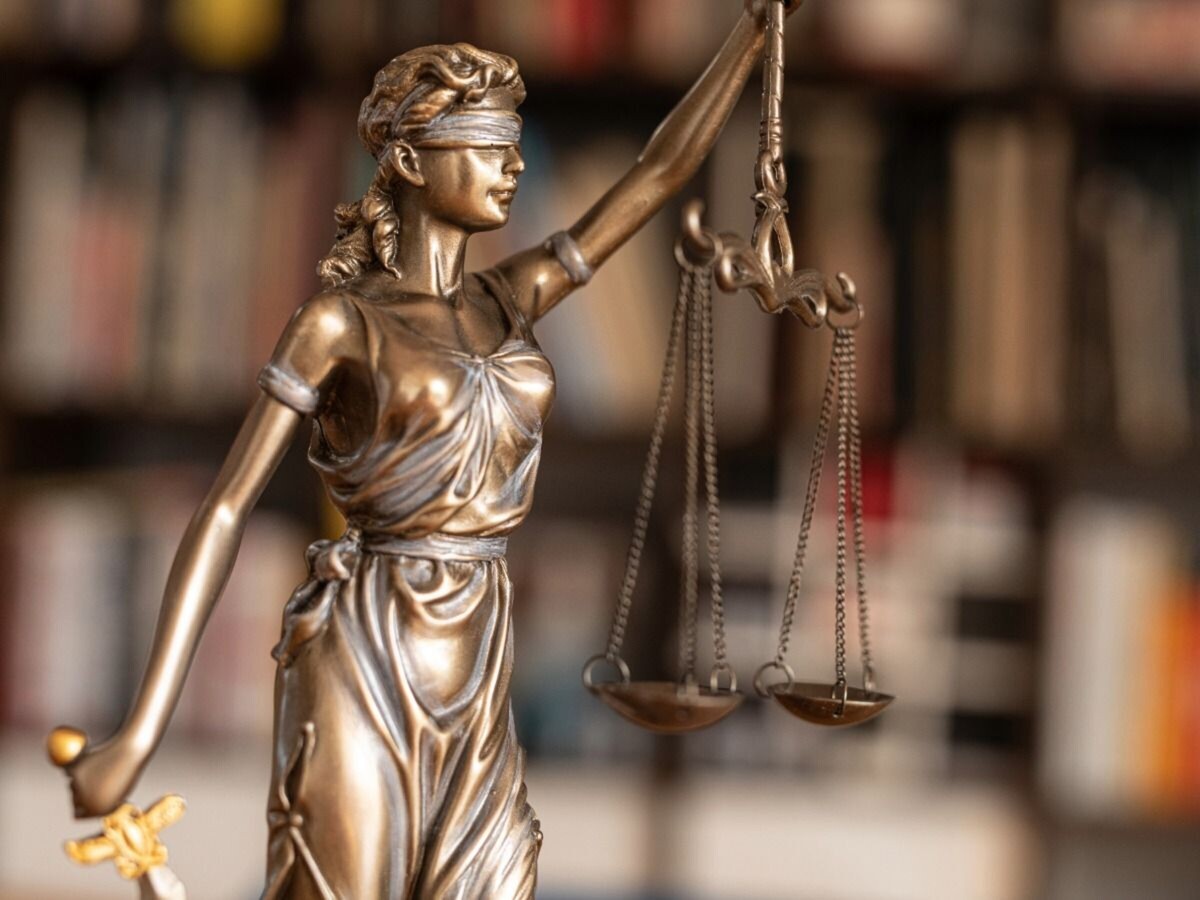
NJ Judicial Conduct Panel Files Complaint After Municipal Judge Wore Palestine Hat and Keffiyeh to Court Training.



A New Jersey judicial conduct prosecutor has filed a formal complaint against Steven Brister, a part-time judge in East Orange Municipal Court who also serves as an acting judge in Newark and Orange, alleging he engaged in prohibited political activity and refused a directive from his presiding judge at a judiciary-sponsored training conference.
The complaint, filed by the Advisory Committee on Judicial Conduct’s disciplinary counsel Daniel Burns and docketed as ACJC 2025-491, stems from Brister’s appearance at the annual Municipal Division Conference on June 9–10, 2025, held at a hotel in Bergen County and attended by more than 400 people.
According to the filing, Brister attended the June 9, 2025, conference wearing “a black baseball cap bearing the flag of Palestine” and the word “Palestine,” along with “a black and white checkered keffiyeh” draped around his neck and shoulders.
The complaint argues that wearing the hat, “particularly when combined” with the keffiyeh, “may reasonably have been interpreted” by conference attendees and “the broader public” as “a political statement in support of Palestine in the ongoing conflict in the region at the time.”
It further alleges that after that morning’s plenary session, the acting municipal presiding judge for the Essex Vicinage told Brister that complaints had been received about his attire and that some attendees were offended, and the presiding judge informed him that “a request had been made for him to remove his baseball cap.”
The complaint says Brister refused to remove the cap unless there was an announcement requiring all attendees to remove headgear, and that he continued wearing it for the remainder of the day.
The filing also states that Brister did not tell his presiding judge or management that his refusal was based on religious beliefs on June 9, 2025.
The complaint describes a phone call and texts later that day in which Brister said he chose the Palestine cap because it was raining and it was “the first one” on his cap shelf, and that he wore the keffiyeh because he might get cold during the conference.
During an October 24, 2025 interview under oath with ACJC staff, Brister testified that he wore the cap because it “matched [his] outfit” and that he did not view the cap or keffiyeh as a political statement, the complaint says.
On the keffiyeh, the complaint reports that Brister said he owns many keffiyehs and chose the black-and-white one because it matched his outfit, and he added, “But for me personally, I wear it for the spiritual and religious reasons.”
The complaint charges Brister with violating three provisions of New Jersey’s Code of Judicial Conduct, including Canon 7, Rule 7(A), which it says “prohibits judges from engaging in any political activity.”
It also cites Canon 1, Rule 1.1 and Canon 2, Rule 2.1, which it describes as requiring judges to observe high standards of conduct, avoid impropriety and the appearance of impropriety, and act in a way that promotes public confidence in judicial integrity and impartiality.
In Count I, the complaint alleges that wearing “a hat containing the Palestinian flag and the word ‘Palestine,’ in combination with the keffiyeh,” at a judiciary-sponsored training event constituted “political speech” that violates Canon 7, Rule 7(A).
It separately alleges that Brister’s refusal to remove his hat at his presiding judge’s request was “insubordination” that failed to meet expected standards and “impugned the integrity of the Judiciary.”
It’s not drawing much attention at all, but perhaps it should be.
At the center of the complaint is an issue that has become increasingly common in workplaces and public institutions: whether a symbol associated with an international conflict is inherently political, and how institutions should respond when observers interpret it that way.
The complaint’s framing relies on interpretation and perception. It does not allege that Brister spoke about the conflict at the conference or tried to influence anyone’s views. Instead, it claims the clothing “may reasonably have been interpreted” as a political statement, and that this alone is enough to trigger New Jersey’s judicial ethics restrictions on political activity.
That approach is likely to land differently depending on what readers think judicial ethics rules are meant to prevent.
One argument for strict enforcement: Courts depend on public confidence that judges will decide cases based on law and facts, not ideology. Ethics rules often aim to prevent judges from appearing aligned with political causes that could later appear in court in some form. The complaint explicitly ties Brister’s attire to the “appearance” and “public confidence” standards in the canons it cites.
One argument for caution and restraint: The standard used here could broaden into a test of what people find offensive or what an observer might infer, rather than what a judge actually did to affect litigants or proceedings. The complaint’s logic could raise concerns about viewpoint neutrality if enforcement depends on which symbols are treated as “political,” and whether cultural or religious items are swept into that category.
Whether clothing is “political” often depends less on fabric than on context and interpretation, which is exactly what makes cases like this so combustible. A hat that says “Palestine” can be read by some people as a statement about a specific, ongoing conflict, while others may view it as cultural identity, solidarity, or even something as mundane as a souvenir.
But if a judiciary enforces ethics rules based on what messages “may reasonably be interpreted” from attire, the line can widen quickly: is a hat that says “USA” just patriotic, or a signal in a polarized era? Is “Switzerland” neutral, or a coded stance about neutrality itself? Is “Russia” automatically an endorsement of a government’s actions, or merely a reference to heritage? What about “China,” “South Africa,” or “Italy” in moments when those countries are tied to hot-button global headlines?
The uncomfortable reality is that national symbols are not inherently political in the abstract, yet they can become political in practice when observers attach meaning to them, and when institutions treat perception as proof. That is why clothing cases tend to feel less like clear rule enforcement and more like a referendum on which identities and causes are allowed to be visible in public life, especially in spaces like courts where neutrality is both essential and constantly contested.
Whether this is “dangerous” for democracy depends on how the standard is applied over time.
If the judiciary draws bright lines that treat contested symbols as political activity whenever a reasonable observer might interpret them as such, that may reduce the risk that courts appear partisan. But it can also increase the risk that disciplinary tools are used to police expression in a way that chills speech, particularly on divisive issues, including international conflicts.
This complaint also highlights a structural reality in judicial systems: judges are held to unusually strict rules compared with most public employees, in part because of the power they wield and the need for litigants to feel they will get a fair hearing. The complaint’s “insubordination” allegation underscores that the dispute is not only about the message inferred from the attire, but also about compliance within the judiciary’s chain of authority at an official training event.
The filing lays out allegations, not final findings. It does not specify what discipline, if any, the ACJC will seek or what ultimate outcome the New Jersey Supreme Court might impose if violations are found. It also does not include Brister’s full response to the charges, beyond the statements and testimony the complaint summarizes.
The complaint also does not detail the nature of the initial complaints beyond stating that attendees were offended and that complaints were received.
For readers in Morris County and across New Jersey, the case is a window into a part of government most people never see: how judges are monitored, and where the state draws the line between a judge’s personal expression and the public’s expectation of neutrality.
The questions likely to shape public reaction are the same ones embedded in the complaint itself: whether clothing can constitute “political speech” under Canon 7, whether “reasonable interpretation” is a workable standard, and whether refusing a presiding judge’s request at an official judiciary event is properly treated as a serious integrity issue.
Bring Meaning Back to the News: Go to TheMinuteman.org to get simple explanations of the trending topics in the news.



Sunny, with a high of 52 and low of 32 degrees. Sunny during the morning, cloudy in the afternoon, overcast for the evening, clear overnight.





idiotic, follow the federal law. These are not made up laws, they were passed by Congress.