32° and Partly Cloudy
Image
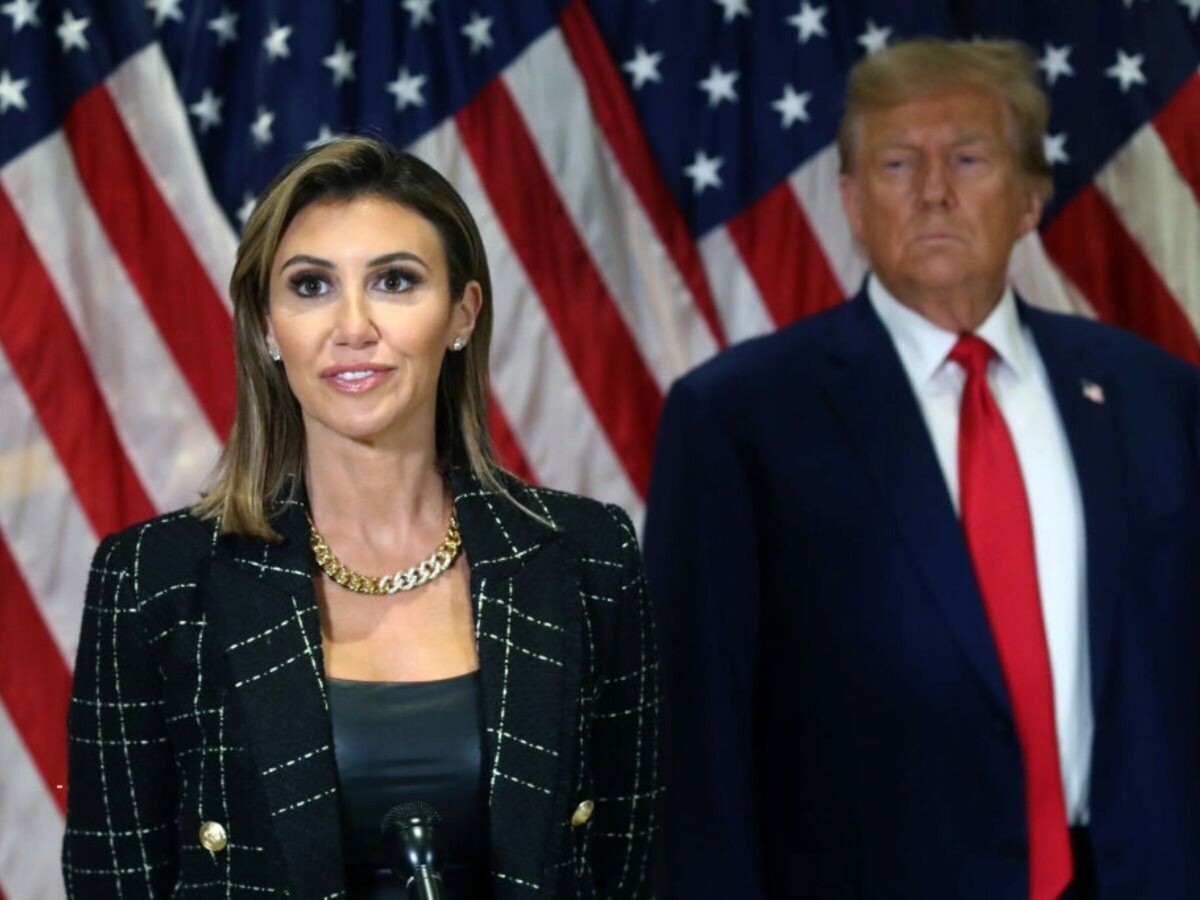
Midnight moves in Washington and Trenton have left two women—and dozens of criminal cases—awaiting a verdict on who really runs the U.S. Attorney’s Office in the Garden State.



NEW JERSEY - The latest clash between President Donald Trump’s administration and the judiciary began at 12:02 a.m. on July 24, when a White House aide informed via email Deputy U.S. Attorney Desiree Leigh Grace that she was being “removed” minutes before she could be sworn in as New Jersey’s new U.S. Attorney.
Moments later the President withdrew Alina Habba’s still-pending Senate nomination, Attorney General Pam Bondi redesignated Habba as “First Assistant U.S. Attorney,” and the Department of Justice invoked the Federal Vacancies Reform Act (FVRA) to declare that Habba had automatically become Acting U.S. Attorney once more.
That predawn maneuver reversed a unanimous order by the judges of the U.S. District Court for New Jersey, issued only a day earlier, that had elevated Grace after Habba’s 120-day interim appointment expired.
Habba’s unusual route to the top job began four months earlier, on March 28 2025, when Bondi used 28 U.S.C. § 546(c) to install the President’s former personal lawyer as interim U.S. Attorney without Senate confirmation. Section 546 limits such an interim tenure to 120 days; if that window closes without a confirmed successor, subsection (d) shifts the appointment power to the district’s judges. The White House nevertheless transmitted Habba’s name to the Senate in late June, even as her interim clock was still running.
On July 22 the 120-day period lapsed, and the very next morning Chief Judge Renée Bumb issued Standing Order 2025-03, appointing Grace—a registered Republican and respected career prosecutor—to lead the office until the Senate acted. Grace scheduled her swearing-in for noon on July 24, but the administration’s midnight email stopped the ceremony, withdrew Habba’s nomination, and used the FVRA to place Habba back in charge.
The legality of that switch now turns on two intersecting statutes. Section 546(d) expressly gives district-court judges—not the executive branch—the power to fill a vacancy once an interim term expires. The FVRA, by contrast, allows a “First Assistant” to serve as acting head when a post is vacant but bars anyone who has been formally nominated from acting unless they served as First Assistant for at least 90 of the previous 365 days. Habba joined the office only in March, well short of the 90-day threshold. The administration argues that withdrawing her nomination “cured” the FVRA defect; legal scholars counter that Congress did not design the statute to be so easily sidestepped.
Historical precedent tilts against the White House position. In the 2020 standoff over Geoffrey Berman, the Justice Department ultimately allowed a court-appointed U.S. Attorney to serve rather than challenge the judiciary’s Section 546(d) authority, and similar disputes in Puerto Rico during the 1990s proceeded without executive attempts to claw the job back.
Meanwhile the leadership limbo has real consequences for New Jersey’s docket. Grace has returned to her former post but cannot sign new filings; Habba continues to approve indictments even as prosecutors hedge with “de facto officer” disclaimers in case her status is later voided. One triple-homicide trial and several dozen other matters have already been delayed, and defense lawyers estimate that more than 1,500 active federal cases could be affected.
The most prominent challenge so far comes from Julien Giraud Jr., a Newark-area defendant facing gun and drug charges. Giraud’s attorney cites last year’s Aileen Cannon decision curbing special-counsel powers to argue that Trump’s “workaround” for Habba likewise violates both the FVRA and Article II. U.S. District Judge Edward Kiel has transferred the motion to Chief Judge Matthew Brann in Pennsylvania, and the Third Circuit Court of Appeals has placed the question of Habba’s authority on an accelerated calendar, promising a precedential ruling within months.
For residents of Morris County, whose federal matters are heard just 25 miles east of the Morristown Green, the uncertainty could postpone jury selections, plea negotiations, and sentencing dates well into the fall term. Until the appellate courts settle whether the executive branch or the district judges made the valid appointment, defendants, victims, and local law-enforcement agencies must navigate a prosecutorial gray zone unprecedented in New Jersey’s recent history.
The Justice Department insists that Habba’s designation is lawful and, even if later overturned, that prior cases remain intact under the “de facto officer” doctrine. Defense attorneys respond that continued prosecutions only deepen the constitutional injury. Whatever the outcome, the dispute is poised to clarify how far a president may go to retain favored prosecutors and to define the boundary between judicial and executive authority in one of the nation’s busiest federal districts.



Sunny, with a high of 41 and low of 30 degrees. Sunny during the morning, overcast in the afternoon, clear for the evening,







idiotic, follow the federal law. These are not made up laws, they were passed by Congress.