45° and Clear



Image
New Jersey legislation imposes stricter penalties for patient brokering and deceptive marketing practices.
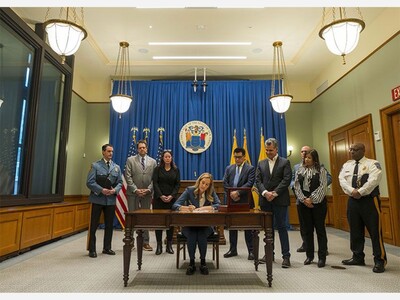
MORRIS COUNTY, NJ — Acting Governor Way has signed two bills into law aimed at strengthening protections for individuals seeking treatment for substance use disorders. The legislation, enacted on August 11, 2025, introduces stricter penalties for patient brokering and deceptive marketing practices in the addiction treatment industry, prioritizing clinical integrity over profit-driven referrals.
“It is important to protect individuals dealing with addiction," said Acting Governor Way. "We must ensure proper treatment without exploitation by holding providers accountable and implementing strong safeguards. Too often, vulnerable people are targeted by those who prioritize profit over care, which is unacceptable.”
The first measure, A3973/S3952, significantly enhances enforcement against patient brokering — the practice of receiving financial compensation for referring individuals to treatment facilities or recovery homes without regard for clinical appropriateness. Under the revised law, such referrals are now classified as third-degree crimes, upgraded from fourth-degree offenses, and carry mandatory fines of $50,000 per violation along with restitution to victims, including patients and insurers.
The bill was developed in response to findings from the New Jersey State Commission of Investigation, which documented the harmful impact of financially motivated referrals on individuals battling addiction. The law explicitly covers both for-profit and nonprofit treatment providers, including recovery residences such as sober living facilities.
"These bills are a positive step for those citizens of our State who suffered from the type of shortcomings in the addiction rehabilitation industry SCI uncovered," said Bruce Keller, Executive Director of the New Jersey State Commission of Investigation. "They also underscore the importance of SCI's work in ensuring New Jersey maintains its reputation as a state readily capable of legislative reforms when problems are brought to light."
The second measure, A3974/S3955, focuses on marketing practices within the treatment sector. It prohibits addiction treatment providers from using misleading advertisements, requiring full transparency about services offered, provider identity, facility locations, and any affiliated entities. The Departments of Health and Community Affairs are now authorized to investigate and issue civil penalties of up to $20,000 per violation for noncompliance.
"Critical laws like this are what happens when people with lived experience are involved in the process. The people who experience the problem are usually the ones who have a solution. We applaud our elected officials for listening and trusting our Not One More members. This legislation will empower our state agencies to rigorously pursue and penalize those who exploit individuals seeking help, ensuring that real recovery is prioritized over profit. You want to go after waste, fraud and abuse, here it is. Corporations profiting off our pain. Some places build relapses into their business models and that is not ok. With rigorous implementation, these bills will hold shady treatment centers and bad actors accountable” said Elissa Tierney, Lead Organizer of the Not One More campaign.
Both bills aim to increase accountability in an industry that served more than 44,000 patients in 2023, according to the New Jersey Department of Human Services. Advocates say the legislation supports the state’s broader efforts to respond to the opioid crisis by ensuring that treatment decisions are guided by medical need and ethical standards rather than financial incentives.
The primary sponsors of the legislation include Assemblymembers Verrelli, Schnall, Reynolds-Jackson, Miller, and Bagolie, along with Senators Vitale, Wimberly, and M. Teresa Ruiz.
“The SCI’s reported findings last February were disturbing, and, as the State invests more dollars in the treatment of addiction, we need to ensure that patients are actually being treated rather than used for profit,” said Senator Vitale, the Chair of the Senate Health, Human Services and Senior Citizens Committee. “This legislation will help to combat the corruption that has resulted from the referral of patients for personal profit and from deceptive marketing practices that are too-often utilized within the industry.”
New Jersey residents struggling with substance use can contact the state’s 24/7 support line at 1-844-ReachNJ for treatment and recovery resources.



Sunny, with a high of 58 and low of 30 degrees. Sunny in the morning, clear during the afternoon and evening,