32° and Partly Cloudy
Image
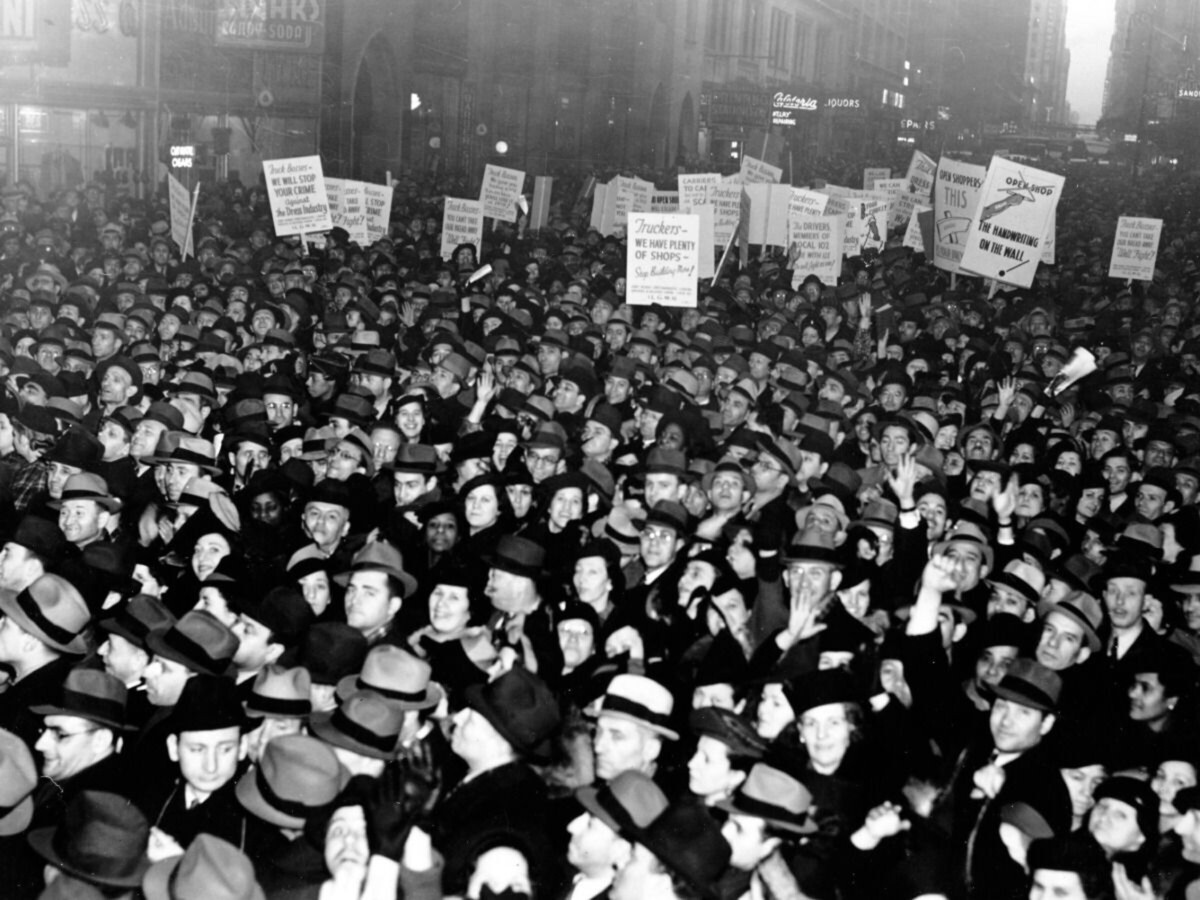
Learn how unions emerged, what they won for workers, how laws and industry reshaped them, and why they’re once again at the center of debates over wages, safety, and inequality.



From TheMinuteman.org - On a gray morning in the fall of 2023, actors in Los Angeles, auto workers in Michigan, and health-care staff in California all did the same quiet, radical thing: they stopped working. Their strikes helped make 2023 one of the most strike-heavy years in recent decades, with nearly 459,000 workers involved in major work stoppages—an increase of more than 280% over the year before.
To some people, these scenes look like a comeback story for organized labor. To others, they’re a reminder of the disruption unions can bring. To understand what unions are doing today, and whether they’re helpful or harmful to workers and the wider economy, you have to go back more than two centuries—because the story of unions is basically the story of how American work changed.
At its core, a labor union is simple: it’s an organization of workers who band together to bargain as a group for better pay, safer conditions, and fairer treatment. Instead of each worker negotiating alone, they negotiate collectively. If negotiations fail, they may use their biggest source of leverage—refusing to work, via strikes or other collective actions.
Unions are funded by dues paid by members and governed by elected leaders. They negotiate binding contracts that typically cover wages, hours, benefits, and grievance procedures. The details change over time, but the basic idea has stayed remarkably consistent: workers pooling power to balance the power of employers.
The first stirrings of organized labor in what would become the United States began long before factories and assembly lines.
These early groups were small, local associations of skilled craftsmen—carpenters, printers, cordwainers—who published price lists for their work and pushed back against wage cuts and longer hours.
Their power, however, was fragile. In 1806, employers sued the Cordwainers for “criminal conspiracy,” arguing that workers banding together to demand higher wages was illegal. A court agreed, essentially criminalizing union activity for decades.
Only in 1842, through the Massachusetts case Commonwealth v. Hunt, did courts begin to recognize that unions, in themselves, were not criminal conspiracies. That ruling opened the door for more sustained organizing.
Meanwhile, the economy was changing. The Industrial Revolution brought factories, long hours, and dangerous conditions, especially in urban centers. Workers began to see that individual complaints weren’t enough. If employers could coordinate, workers would have to as well.
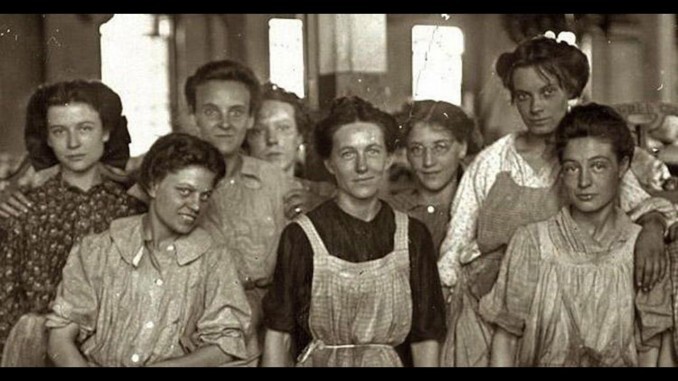 Lowell mill girls struck for improved wages and formed the Factory Girls Association to provide better strike assistance. Lowell Mill Girls Strike, Cir. 1834
By the mid-1800s, the United States was transforming into an industrial powerhouse. That transformation came with harsh realities: 10- to 12-hour days, six-day weeks, widespread child labor, and few safety rules.
New organizations sprang up to meet this moment:
The 8-hour day became a rallying cry. In 1872, a massive Eight-Hour Day strike in New York City involved roughly 100,000 workers. Throughout the late 19th century, workers repeatedly walked off the job to demand shorter hours, better pay, and the basic idea that they should have lives outside of work.
But employers—and often the government—pushed back hard.
Two notorious conflicts show how violently labor disputes could be suppressed:
Unions were gaining members and visibility, but they were also learning a hard lesson: without legal protection, organizing often meant risking your job, your home, and sometimes your life.
 Young boys working in the coal mines were often referred to as Breaker Boys. This large group of children worked for the Ewen Breaker in Pittston, Pennsylvania, in January 1911. [Photo by Lewis Hine/The U.S. National Archives]
The early 1900s were filled with images that are now iconic: young “breaker boys” in coal mines, children working 12-hour days in canneries and textile mills, families stitching lace or peeling shrimp late into the night just to survive.
One disaster became a turning point:
Unions made workplace safety a central demand, especially in dangerous industries like mining, steel, and manufacturing. Over time, their efforts contributed to:
These efforts laid the groundwork for later landmark laws, including the Occupational Safety and Health Act (OSHA) in 1970, which empowered the federal government to enforce health and safety standards at work.
During World War I, organized labor gained strength and some recognition from the government, particularly where war production was concerned. But the end of the war unleashed pent-up frustration. Inflation had eroded wages—food prices more than doubled between 1915 and 1920, and clothing costs more than tripled.
In 1919, more than 4 million workers—about a fifth of the U.S. workforce—went on strike. This wave included:
Business leaders and many politicians framed these strikes as radical threats—partly because they happened amid fears of Bolshevism after the Russian Revolution. The result was a backlash: many gains from the war years were rolled back, union membership fell from 5 million to 3 million, and courts struck down child-labor and minimum-wage laws.
It was a preview of a pattern that would recur: periods of union growth followed by intense resistance.
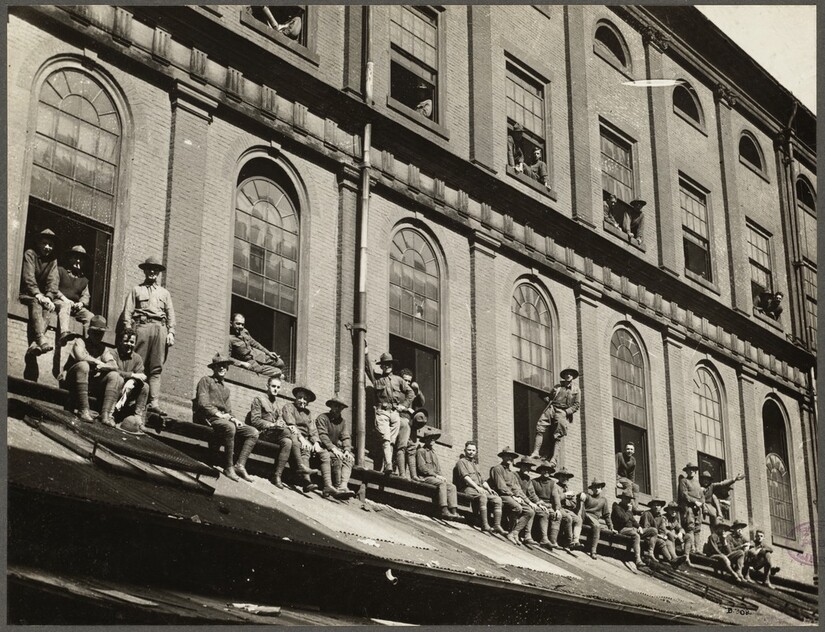 The National Guard at their headquarters, Faneuil Hall, during the Boston Police strike, 1919.
The Great Depression and the New Deal fundamentally reshaped the rules of the game.
Facing mass unemployment and economic collapse, President Franklin D. Roosevelt’s administration embraced policies that, for the first time, explicitly protected workers’ right to organize:
These laws didn’t hand everything to unions, but they shifted the playing field. Combined with militant organizing tactics—like the Flint sit-down strike of 1936–37, where autoworkers literally occupied General Motors factories—unions began winning recognition and contracts in mass-production industries.
The Congress of Industrial Organizations (CIO) (later merged with the American Federation of Labor to form the AFL–CIO) led drives to organize entire industries: auto, steel, rubber, and more.
After World War II, unions reached peak strength:
This was the era when the classic image of the “union job”—good wages, strong benefits, and job security—became real for millions of families.
Today’s union landscape rests on a cluster of key laws and institutions:
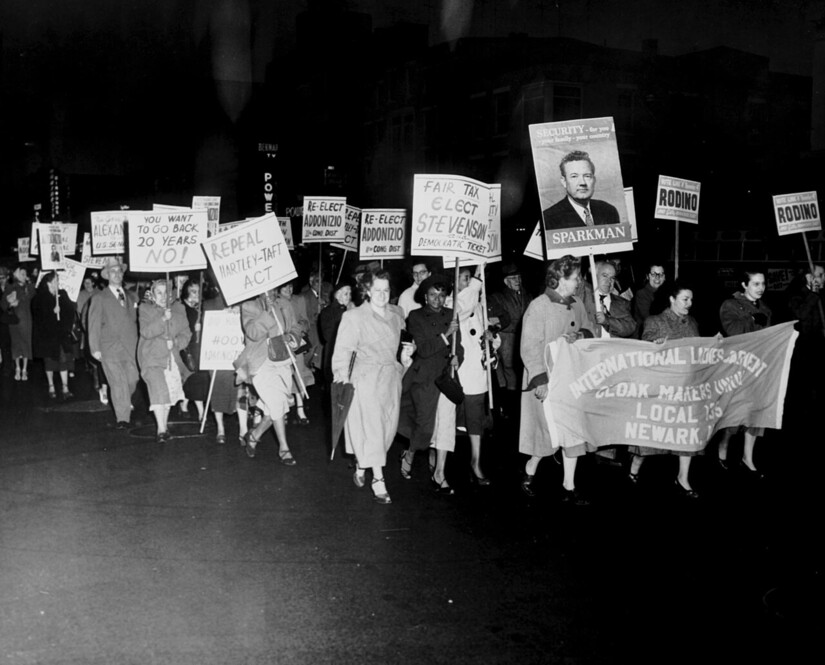 The International Garment Workers Union protests the Taft-Hartley Act, 1952. [Photo by Kheel Center Cornell University]
Under federal law, workers cannot be fired for participating in a protected strike or picketing—though there are important caveats.
Public-sector workers are governed by a different patchwork of federal and state laws. Federal employees in many roles—famously, air traffic controllers—are barred from striking. In 1981, when the air traffic controllers’ union (PATCO) went on strike, President Ronald Reagan fired more than 11,000 of them and decertified the union, signaling a tougher era for organized labor.
If the mid-20th century was unions’ high point, the late 20th century was a long slide.
Several forces converged:
By 2022, union membership had fallen to about 14.3 million workers, or 10.1% of the workforce. Only 6.0% of private-sector workers were unionized, compared with 33.1% of public-sector workers.
Some see this decline as a necessary adjustment in a global, competitive economy. Others see it as the erosion of a key pillar of the middle class.
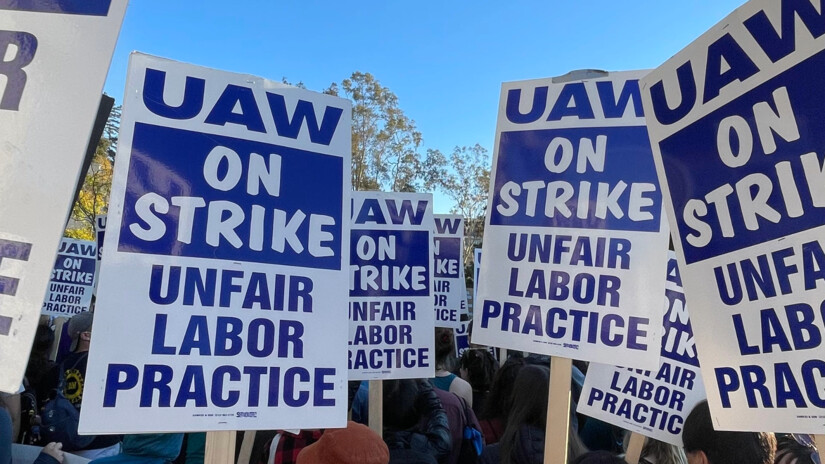 On November 14, some 48,000 academic workers went on strike for better pay and benefits. Led by the United Auto Workers (UAW) labor union, it was the largest strike in the United States in 2022.
Regardless of where you stand politically, there are some concrete, measurable ways unions have reshaped work in the United States.
Research from the Economic Policy Institute and others finds that, on average:
Unions don’t just set wage floors; they also negotiate detailed benefit packages and due-process protections. Many union contracts require employers to show “just cause” and follow clear procedures before firing workers, which is much more protective than typical at-will employment.
Safety has always been a central union concern. From coal miners demanding better ventilation and equipment to factory workers pressing for machine guards and fire exits, unions have pushed for:
A historical review from OSHA-focused educators notes that union pressure helped drive the adoption of workers’ compensation laws, safety inspections, and, ultimately, the OSHA framework that applies today.
Unions have a complicated history on race and gender—many early unions explicitly excluded Black workers, women, and immigrants. Over time, new organizations like the Congress of Industrial Organizations (CIO), leaders like A. Philip Randolph (Brotherhood of Sleeping Car Porters), and women organizing during World War II pushed unions to become more inclusive.
Modern data show that:
Unions also reduce overall wage inequality. One estimate suggests that the decline of unions explains about one-third of the rise in wage inequality among men and one-fifth among women between 1973 and 2007, as middle-wage workers lost the bargaining power unions once provided.
In short: unions tend to compress wage distributions, pulling up the bottom and middle more than the top.
Throughout U.S. history, major strikes have marked turning points—not just for specific workers, but for public attitudes and policy.
Historical highlights include:
A long list of major U.S. strikes by size shows that large-scale work stoppages have never entirely disappeared, from coal strikes in the early 1900s to teachers’ strikes and communication workers’ strikes in recent decades.
After a relatively quiet period, the 2010s and early 2020s saw a resurgence of large-scale labor actions:
Examples from 2023 include:
These high-profile conflicts were part of a broader pattern: workers in health care, higher education, retail, museums, and even tech and logistics are experimenting with organizing and strikes as leverage in an economy marked by inflation, high corporate profits, and long-running wage stagnation.
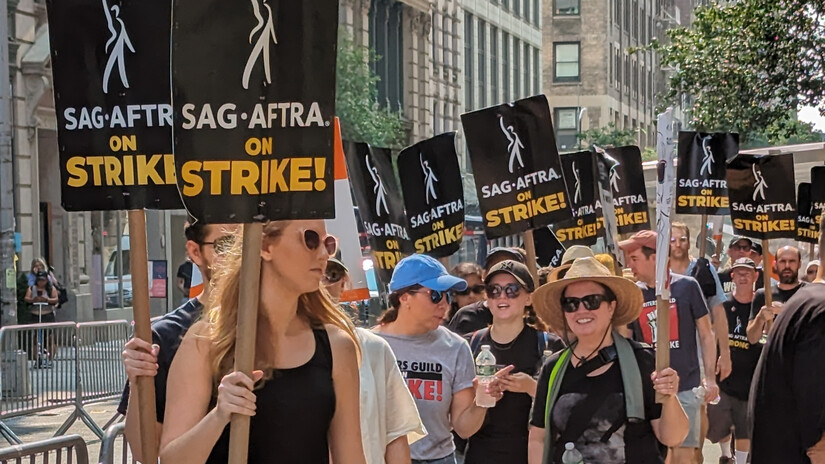 From July 14 to November 9, 2023, the American actors’ union SAG-AFTRA went on strike over a labor dispute with the Alliance of Motion Picture and Television Producers. [Photo by Eden, Janine and Jim from New York City, 17 July 2023]
Formally, union membership is far below mid-century peaks. As of 2024, only about one in ten American workers is in a union, and most of those are in the public sector.
Yet public opinion has shifted in a different direction:
At the same time, workers are filing more petitions for union elections and launching organizing drives at big-name employers in coffee shops, warehouses, media, and higher education. Union-contract coverage increased slightly in 2023, with more than 16.2 million workers represented by unions, even though overall unionization rates remained low.
Modern unions are not just negotiating over hourly pay. Common themes now include:
The core mission is familiar—workers seeking a voice and fair share—but the context is very 21st-century.
Despite renewed energy, union organizers and members face structural obstacles:
Unions are experimenting with new forms—sectoral bargaining, worker centers, and multi-employer campaigns—but the rules of the game still make organizing a steep uphill climb in many industries.
That’s the question at the heart of almost every debate about unions. Looking at the evidence and history, a few things stand out.
Research and historical experience suggest unions:
From the eight-hour day and the weekend to child-labor bans and OSHA, many protections people take for granted today were hard-fought demands of union campaigns.
Critics argue that unions can:
Historically, some unions not only excluded certain workers but also aligned with discriminatory or nativist policies—a real harm that took decades of internal reform to confront.
Whether unions are “good” or “bad” depends a lot on what you value and which outcomes you prioritize. But several conclusions are hard to escape:
Standing on a picket line today is not the same as striking in 1894 or 1937. But the core questions haven’t really changed:
Who gets to decide what work is worth? Who bears the risk when markets change? And how much say should workers have in the places where they spend so much of their lives?
Labor unions are one answer Americans have been testing, revising, and fighting over for more than two centuries. Whatever comes next—whether unions continue to rebound, reinvent themselves, or recede—the story of work in the United States can’t really be told without them.
This article is from TheMinuteman.org, Morristown Minute's new partner site dedicated to helping us all better understand the news through concise explanations and deep dives into complex topics.

Sunny, with a high of 41 and low of 30 degrees. Sunny during the morning, overcast in the afternoon, clear for the evening,




idiotic, follow the federal law. These are not made up laws, they were passed by Congress.