48° and Mist

New Laws in NJ: Electric Vehicle Access, Farmers’ Rights, and Public Safety Funding


New laws address EV charging enforcement, farm protections, firefighter funding, and state property sales; several other measures receive conditional or absolute vetoes.
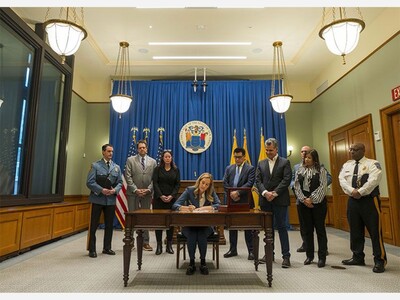
NEW JERSEY — On November 13, Governor Phil Murphy signed into law a series of measures targeting electric vehicle infrastructure enforcement, agricultural legal protections, public pension benefits, and municipal fire service funding. In total, five bills were enacted, while eight were conditionally vetoed, and two received absolute vetoes.
Key Legislation Signed
-
Parking Enforcement at EV Charging Stations: A-3035/S-4134 (Calabrese, Speight/Diegnan, Smith) prohibits non-electric vehicles—or electric vehicles not actively charging—from occupying designated EV charging spaces. The bill aims to ensure the availability and accessibility of EV infrastructure as adoption increases statewide.
-
Legal Protections for Farmers: A-4603/S-3662 (Freiman, Sauickie, Peterpaul/Singleton, Space) allows commercial farmers to recover reasonable costs and attorney’s fees when successfully defending against bad faith complaints under New Jersey’s Right to Farm Act, reinforcing legal support for the agriculture sector.
-
Pension System Benefit Adjustments: A-5049/S-3812 (Greenwald, Sampson, Karabinchak, Hutchison/Beach, A.M. Bucco), accompanied by a gubernatorial statement, removes specific limitations on the receipt of retirement or death benefits under the Police and Firemen’s Retirement System (PFRS) in designated circumstances.
-
Fire Service Funding Through Hotel Fees: A-5688/S-4475 (Pintor Marin/Ruiz) authorizes select municipalities to impose a hotel occupancy surcharge to fund local fire services, with an associated state appropriation for oversight and implementation.
-
Sale of Surplus State Property: A-5857/S-4621 (Reynolds-Jackson, Verrelli/Greenstein, Turner) permits the State Treasurer to sell surplus land and buildings in Trenton and Lawrence Township (Mercer County) to support fiscal and community development priorities.
Conditionally Vetoed Measures
Governor Murphy issued conditional vetoes—typically used to request technical changes or additional oversight—on eight bills, including:
-
Establishing an Office of Veteran Advocate
-
Licensing cosmetic retail services
-
Creating an automated approval system for residential solar energy
-
Requiring inspections within defined timeframes for construction code enforcement
-
Including menopause-related education in continuing medical training
-
Revising timelines for school district audits
-
Clarifying rules for vehicle franchisors
-
Differentiating some legal services from insurance offerings
In each case, the Governor returned the legislation to the Legislature with recommended revisions.
Absolute Vetoes
Two bills were fully rejected:
-
A-3323/S-3713 sought to count extracurricular activity pay toward pension compensation under the Teachers’ Pension and Annuity Fund (TPAF).
-
A-4971/S-3891 proposed directing the Economic Development Authority (EDA) to provide grants to small businesses impacted by state infrastructure projects.
In issuing absolute vetoes, the Governor declined to approve the legislation in any form, typically citing legal, budgetary, or policy concerns.
Each legislative action reflects the Murphy administration’s focus on targeted reforms across sectors including infrastructure, education, agriculture, public safety, and energy. Full text and official statements accompanying conditional and absolute vetoes are available through the Governor’s Office and the New Jersey Legislature’s website.