30° and Clear

36 AGs Warn Congress Against Ban on State AI Protections


In a bipartisan letter, 36 attorneys general warn Congress against stripping states of power to protect residents from harmful AI practices.
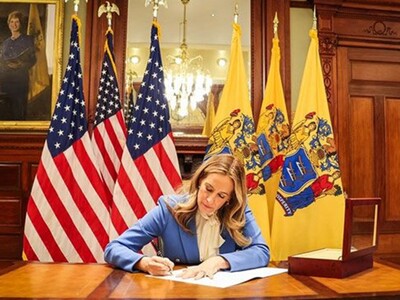
New Jersey Attorney General Matthew J. Platkin has joined a bipartisan coalition of 36 attorneys general urging Congress not to pass legislation that would prohibit states from enacting or enforcing laws regulating artificial intelligence (AI). The coalition’s warning comes amid reports that a prohibition on state AI laws may be inserted into a federal military funding bill, a move critics say would endanger vulnerable populations and undermine local control.
In a November 25 letter addressed to Congressional leadership, the attorneys general—including Democrats and Republicans—emphasize that while AI has promising applications in healthcare, education, and public safety, it also poses serious threats, particularly to children, senior citizens, and individuals with mental health vulnerabilities.
“It is outrageous that Congress would try to prevent states from taking necessary steps to keep our residents safe from the threats posed by unregulated and unmonitored artificial intelligence,” said Attorney General Matthew J. Platkin. “Our law enforcement partners and consumer protection advocates across New Jersey are increasingly alarmed that children, senior citizens, and others are being victimized and exploited by AI-enabled criminal-schemes or AI-fueled chatbots. I am proud to stand with a bipartisan coalition of attorneys general to oppose this deeply misguided congressional effort to enrich a small number of AI companies and executives at the expense of our state’s residents.”
Growing Dangers from Unregulated AI
The attorneys general cite multiple dangers currently emerging from AI misuse:
-
AI-powered voice clones and deepfakes used in scams targeting the elderly
-
Inappropriate and sexually explicit chatbot interactions with children
-
Reinforcement of delusions, self-harm, and suicidal ideation by generative AI platforms
-
Manipulative AI-generated advertising and misinformation during elections
“We are also deeply troubled by sycophantic and delusional generative AI outputs plunging individuals into spirals of mental illness, suicide, self-harm, and violence.2 And we are concerned that AI chatbots and 'companions' are engaging children in highly inappropriate ways, including with conversations that feature graphic romantic and sexual roleplay, encouragement of suicide, promotion of eating disorders, and suggestions to prioritize use of the AI at the expense of connecting with friends and loved ones in real life,” the letter states.
New Jersey's Role and AI Policy Background
Attorney General Platkin joins a broad coalition that includes attorneys general from states as diverse as California, Texas, New York, Arizona, Indiana, and Mississippi—a rare show of bipartisan unity around emerging technology regulation.
The letter points to specific state-level AI laws already in place or proposed, including:
-
Laws banning AI-generated misinformation during elections
-
Requirements for disclosure when consumers interact with AI
-
Protections for renters against algorithmic price-setting
-
Prohibitions on deepfake pornography and identity theft
-
Data privacy statutes that allow consumers to opt out of automated decision-making
Twenty states have already enacted comprehensive data privacy laws with AI-specific provisions, according to the attorneys general.
Warning Against Preemption
The letter warns that a blanket federal preemption of state AI laws would severely limit the ability of states to respond nimbly to evolving threats. It argues that the “laboratories of democracy”—the states—are best equipped to test and tailor protections for their unique populations.
“Federal inaction paired with a rushed, broad federal preemption of state regulations risks disastrous consequences for our communities,” the letter states.
The coalition also criticized the idea of inserting such sweeping policy changes into unrelated appropriations legislation, rather than debating them through a formal legislative process.
A Call for Collaboration—Not Restriction
Rather than stripping states of authority, the attorneys general called on Congress to work with them to develop meaningful national AI safeguards, while still allowing states to innovate and act quickly in response to new threats.
“If Congress is serious about grappling with how AI’s emergence creates opportunities and challenges for our safety and well-being, then the states look forward to working with you on a substantive effort,” the letter concludes.
A Bipartisan Effort with National Reach
Joining New Jersey in signing the letter were attorneys general from 36 jurisdictions, including the District of Columbia, American Samoa, and the U.S. Virgin Islands. The letter was co-led by New York, Washington, and Rhode Island.
The full letter is available at the National Association of Attorneys General or on the New Jersey Attorney General’s official website.