44° and Clear

Lisa McCormick calls for constitutional challenge against Trump's immigration spending


A progressive Democrat from New Jersey is launching a constitutional challenge against the Trump administration's immigration enforcement spending, arguing that the $170 billion allocated to federal agencies over four years violates a specific limit the Founding Fathers placed on military funding.

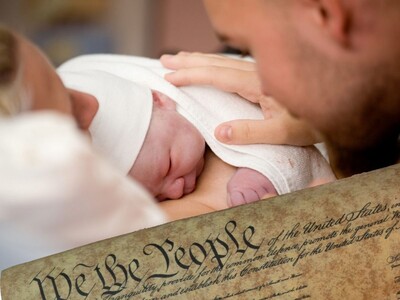
Lisa McCormick, who mounted an insurgent primary campaign against former Sen. Robert Menendez in 2018, asserts that the One Big Beautiful Bill Act (OBBBA) breaches Article I, Section 8, Clause 12 of the Constitution — known as the Army Clause.
The provision grants Congress the power to "raise and support Armies, but no Appropriation of Money to that Use shall be for a longer Term than two Years."
"The Founders were terrified of standing armies controlled by the executive branch without continuous congressional oversight," McCormick said. "They built a two-year funding limit into the Constitution for a reason: so that every two years, voters would have a say through their representatives about whether to sustain a permanent military force."
OBBBA, which was signed into law on July 4, 2025, provides Immigration and Customs Enforcement, Customs and Border Protection, the Department of Homeland Security, and the Pentagon with $170 billion for domestic immigration enforcement through 2029.
When broader Pentagon and homeland security appropriations in the bill are included, the multi-year funding approaches $320 billion — exceeding the combined annual budgets of the Army, Marine Corps, and Space Force.
McCormick's proposed lawsuit would argue that ICE and CBP, though nominally civilian agencies, function as a standing paramilitary force.
The argument draws on recent reporting that DHS committed more than $144 million for firearms and ammunition in 2025 alone, with ICE weapons spending quadrupling and CBP weapons contracts doubling over the previous year. Those purchases include thousands of "high-lethality weapons," tactical gear, and crowd-control munitions.
The constitutional question centers on what constitutes an "army."

The Army Clause was designed to prevent Congress from entrenching a permanent, centrally controlled coercive force under executive command. While naval forces were exempted and state militias were viewed as safeguards against federal overreach, the Founders mandated that any standing army must face biennial funding renewal.
"The Army Clause in Article I, Section 8, Clause 12 of the Constitution, was designed to prevent Congress from creating a permanent, unchecked standing army in peacetime, which the Founders feared could menace popular liberty," explained McCormick. "By limiting military appropriations to a maximum of two years, the Clause ensures democratic, short-term control over troops that could infringe on our freedom."
The Department of Justice has previously addressed the Army Clause's scope in opinions from 1904 and 1948, applying its restrictions to armed forces even when funded through departments other than the Defense Department.
Those opinions concluded that appropriations for personnel and operations — as opposed to weapons procurement or construction — fall within the clause's reach.
"The Constitution doesn't let Congress evade its limits by rebranding an army as something else," McCormick said. "If it walks like an army and fights like an army, it's an army — and its funding must expire in two years."
The OBBBA provides four-year funding for ICE and CBP at dramatically expanded levels: approximately $75 billion for ICE, $18 billion for CBP hiring and technology, $47 billion for border wall construction, and a $22 billion fund that the Homeland Security secretary may allocate to any border enforcement purpose without restriction.
McCormick directed sharp criticism at Democratic leadership, including Sen. Cory Booker of New Jersey and Minority Leader Chuck Schumer of New York, for failing to use procedural tools to block or modify the legislation.
"Senator Booker sat silent while a bill funding a federal paramilitary force for four years sailed through Congress," she said. "Minority Leader Schumer had every opportunity to force a debate on whether the Army Clause means anything anymore. They chose not to."

McCormick called for Schumer to be fired after he capitulated on a GOP spending bill in March 2025, and also when he allowed his members to fold 40 days into the government shutdown in November. She again demanded his removal when Schumer rushed to pass five budget bills after the murder of Renee Good and Alex Pretti, instead of leveraging his power to force the Trump Republicans into serious negotiations on federal priorities, health care costs and accessibility, or even the rights of people to be free from Gestapo-like secret police and military occupations in American cities.
The constitutional challenge arrives as House Armed Services Committee leaders are calling for an additional $450 billion in defense funding through reconciliation this year, potentially locking in even more multi-year military appropriations insulated from annual review.
McCormick's proposed legal strategy includes a novel procedural mechanism: she is urging House and Senate rules committees to adopt a "point of order" allowing any member to challenge multi-year funding for forces organized on a standing-army model.
If sustained, the objection would automatically remove the offending provision unless two-thirds of the chamber voted to override.
That approach would embed constitutional enforcement directly into congressional procedure, forcing members to vote explicitly on whether to waive the Founders' two-year limit.
The Supreme Court has described congressional power under the Army Clause as "broad and sweeping," but it has never directly addressed whether the clause applies to civilian law enforcement agencies armed and organized along military lines.
The top court has held that states implicitly renounced their sovereignty to interfere with federal military policy when joining the Union, but the question of what constitutes a "standing army" for constitutional purposes remains unresolved.
McCormick, who earned two of five votes cast in her 2018 primary against Menendez — who was later sentenced to 11 years in federal prison on corruption charges — acknowledges her approach may be difficult, but she insists the constitutional violation is too significant to ignore.
"This isn't about partisan politics," she said. "This is about whether Congress will remain relevant as a coequal branch of government or whether it will simply hand the president a blank check for four years and go home. The Constitution expects more. The American people deserve more."