36° and Clear

There are more than 80 data centers in New Jersey — and more are planned or under construction.


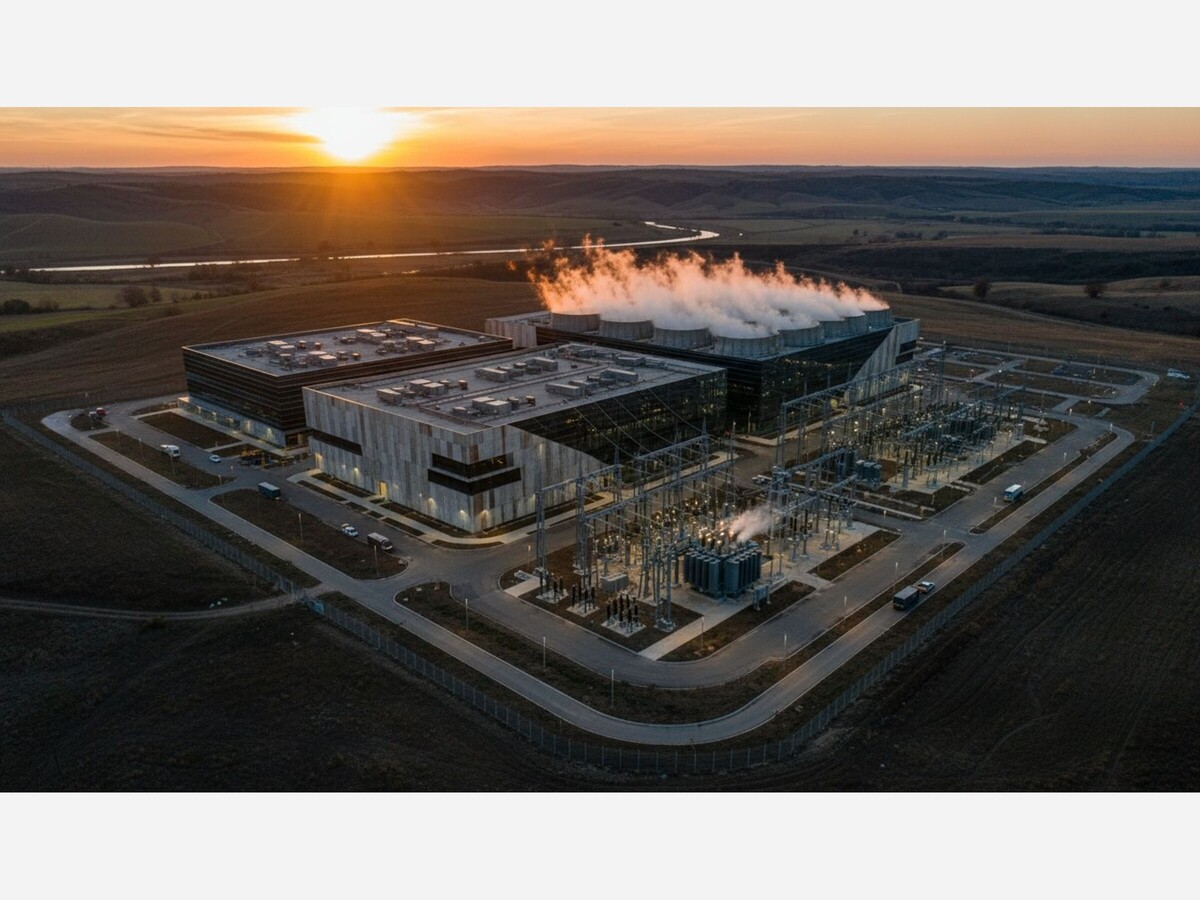
AI data centers look like ordinary warehouses, but inside they function like nonstop factories for computation, turning electricity into heat at a scale that forces tough local tradeoffs.
AI data centers are easy to misunderstand because they look like ordinary industrial buildings. No smokestacks. Few employees. Minimal traffic once construction ends. But behind the walls are thousands of power-hungry chips, packed into racks that run hot enough that cooling becomes a second industry inside the first. The “cloud” turns out to be physical, local, and increasingly difficult to hide from people who pay electric bills and live near the water supply.
A traditional data center stores and serves data: websites, photos, business software, streaming, and cloud computing. An AI data center does that too, but it is also a specialized factory for computation. The big difference is density.
AI workloads, especially training and large-scale inference, push far more electricity through the same square footage. That electricity becomes heat, and heat must be removed quickly to keep hardware from failing. So the facility’s real outputs are: computation, heat, and a growing set of demands on local infrastructure.
This is why communities are suddenly arguing about things that used to feel abstract, like “capacity auctions,” water permits, and transmission interconnection queues.
Learn more here: The New Boomtowns: How AI Data Centers Are Rewiring Power, Water, and Local Politics