62° and Sunny
Image

With nearly 82 million Americans expected to travel this Thanksgiving, motorists and flyers in the tri‑state area face peak congestion and heavy skies — here’s how local travelers can plan ahead.



NEW JERSEY - As AAA forecasts the busiest Thanksgiving travel period since 2005, travelers in the New Jersey–New York region should brace for significant roadway congestion and packed airports, particularly during peak departure and return windows. Careful planning — including optimal timing, route choices, and airport strategies — will be essential to navigating this year’s record-setting holiday rush.
 Source AAA
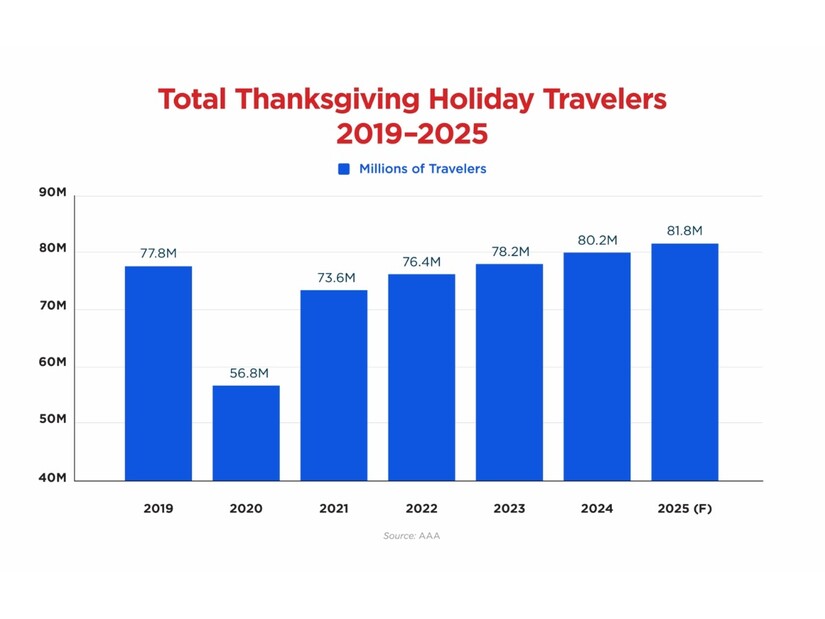
According to AAA’s 2025 Thanksgiving Travel Forecast, approximately 81.8 million Americans are expected to travel 50 miles or more between Tuesday, November 25, and Sunday, December 1. This represents a 2.5% increase over 2024 and marks the third-highest Thanksgiving travel volume since tracking began in 2000.
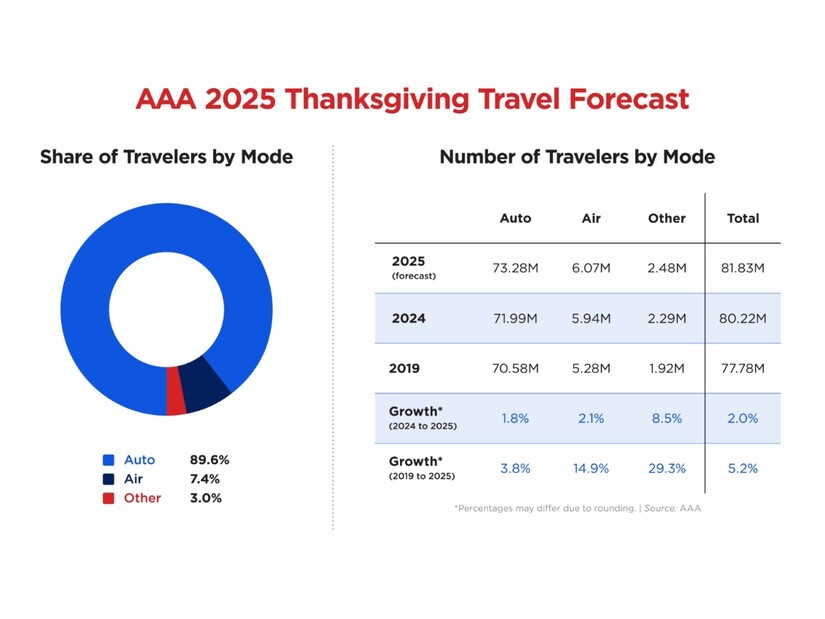
The vast majority of these travelers — more than 73 million people — will travel by car, despite slightly higher gas prices and potential for inclement weather. An additional 6 million travelers are expected to fly, while nearly 2.5 million will use buses, trains, or cruise ships.
In New Jersey alone, more than 2 million residents are planning trips over 50 miles, placing a heavy burden on the state’s highways and transportation hubs. Given the region’s population density, proximity to major interstates, and three major airports — Newark Liberty International (EWR), JFK, and LaGuardia (LGA) — the tri-state area is poised to experience some of the most severe travel congestion in the nation.
 Source AAA
AAA and traffic analytics firm INRIX have identified specific time windows during which road congestion will be most severe nationwide, including the New Jersey and New York metropolitan areas. These patterns closely apply to major local routes such as the New Jersey Turnpike, Garden State Parkway, I-78, I-287, and I-95.
Tuesday, Nov 25: 12:00 p.m. – 9:00 p.m. (especially bad outbound traffic)
Wednesday, Nov 26: 11:00 a.m. – 8:00 p.m.
Friday, Nov 28: 1:00 p.m. – 7:00 p.m.
Saturday, Nov 29: 1:00 p.m. – 8:00 p.m.
Sunday, Nov 30: 11:00 a.m. – 8:00 p.m. (return peak)
Monday, Dec 1: 12:00 p.m. – 8:00 p.m.
Tuesday: Before 12:00 p.m.
Wednesday: Before 11:00 a.m.
Thursday (Thanksgiving Day): All day (minimal congestion)
Friday–Saturday: Before 11:00 a.m. or 10:00 a.m., respectively
Sunday: Before 11:00 a.m.
Monday: After 8:00 p.m.
These patterns are especially critical for regional drivers planning to use the New Jersey Turnpike, Garden State Parkway, or Hudson River crossings like the George Washington Bridge, Lincoln Tunnel, or Holland Tunnel. Congestion in these areas is expected to spike during the afternoon hours on Tuesday and Wednesday and again on Sunday as holiday travelers return home.
Traffic delays in the tri-state region are expected to be among the worst in the country. AAA and INRIX note particularly heavy congestion in the New York-to-Hamptons corridor via the Long Island Expressway, where one route is projected to take 4 hours and 8 minutes — 163% longer than normal — during the Tuesday afternoon rush.
In New Jersey, similar conditions are anticipated on key holiday corridors. Based on current forecasts:
New Jersey Turnpike (I-95): Expect delays of up to 230% over normal travel time, especially southbound Tuesday and Wednesday afternoons.
Garden State Parkway: Heavy volume likely in both directions Tuesday through Sunday, especially in Monmouth and Ocean counties.
I-78 and I-287: Congestion likely as travelers head west and south out of the metro region.
I-95/Route 1 Corridor: Travelers heading toward Philadelphia and South Jersey will see dense traffic during Tuesday and Wednesday afternoons.
Hudson River Crossings: George Washington Bridge, Lincoln Tunnel, and Holland Tunnel will be chokepoints for both outbound and return traffic. Consider alternate crossings or off-peak hours.
Airports in the New York City metro area — JFK, LGA, and Newark (EWR) — are expected to handle over 3.2 million passengers during the Thanksgiving period, with the Port Authority projecting up to 8.7 million travelers through regional airports, tunnels, bridges, and transit hubs between November 25 and December 2.
While air travel nationwide is only up slightly from last year, local airports remain among the busiest in the country. Travelers can expect the highest congestion at airports on:
Wednesday, Nov 26
Sunday, Nov 30
Monday, Dec 1
Delays are also more likely at EWR, which had a November on-time arrival rate of just 71.5%, compared to 88% at JFK, according to recent airport reliability data.
To mitigate delays and long wait times, travelers are advised to:
Arrive at the airport at least 2 hours early for domestic flights and 3 hours for international.
Fly on Thanksgiving Day if possible, which typically features lighter traffic and lower fares.
Avoid returning Sunday afternoon or evening when crowds are at their peak.
Monitor flight status and airport alerts closely and allow ample time for baggage, parking, and security checks.
Travelers taking Amtrak, NJ Transit, or intercity buses should anticipate increased ridership throughout the week, particularly Wednesday and Sunday. Train and bus services in the region will likely add cars or scheduled trips, but some routes may sell out or experience delays due to weather, track congestion, or station bottlenecks.
Booking in advance and traveling during early morning hours will provide the best chances of avoiding crowds and delays.
AAA attributes the increased travel volume to multiple factors, including stable fuel prices, a strong economy, and pent-up demand. The national average for gasoline is approximately $3.06 per gallon, making car travel a comparatively affordable option. Additionally, improved labor conditions and more flexible remote work schedules may be encouraging longer Thanksgiving trips.
Rental car demand is also expected to be high — particularly on Wednesday, November 26, when AAA predicts the most rental car pick-ups. Travelers seeking vehicles in the NJ/NY area should reserve early to avoid shortages and rate surges.
To navigate the Thanksgiving travel rush more efficiently, local residents should follow these key strategies:
Leave early: Travel Tuesday morning or early Wednesday to avoid afternoon gridlock.
Avoid peak return windows: Travel back before 11:00 a.m. Sunday or after 8:00 p.m. Monday for a smoother return.
Choose airports wisely: JFK tends to have better on-time performance than EWR; consider this if flexible.
Fly on Thanksgiving Day: Airfare and airport crowds are often lower.
Monitor your route: Use real-time traffic apps to reroute around incidents, especially on the Turnpike or Parkway.
Expect delays: Any accident, construction zone, or weather event will likely cause extended backups due to high base volume.
Plan around crossings: Avoid Hudson River crossings during peak hours, or use ferries and rail alternatives where possible.
Thanksgiving 2025 will see a significant rebound in holiday travel volume, with more than 81 million Americans on the move and millions of those concentrated in the densely packed New Jersey–New York corridor. Whether traveling by car, plane, or train, timing will be everything.
By planning around high-volume periods and anticipating the heaviest congestion zones, area residents can avoid the worst of the gridlock — and arrive at their Thanksgiving destinations with less stress and more time to enjoy the holiday.
Want to understand the news better? Go to TheMinuteman.org to get simple explanations of the trending topics in the news.



Moderate rain, with a high of 67 and low of 42 degrees. Fog in the morning, patchy rain nearby in the afternoon, overcast during the evening, patchy rain nearby overnight.








idiotic, follow the federal law. These are not made up laws, they were passed by Congress.