62° and Sunny
Image
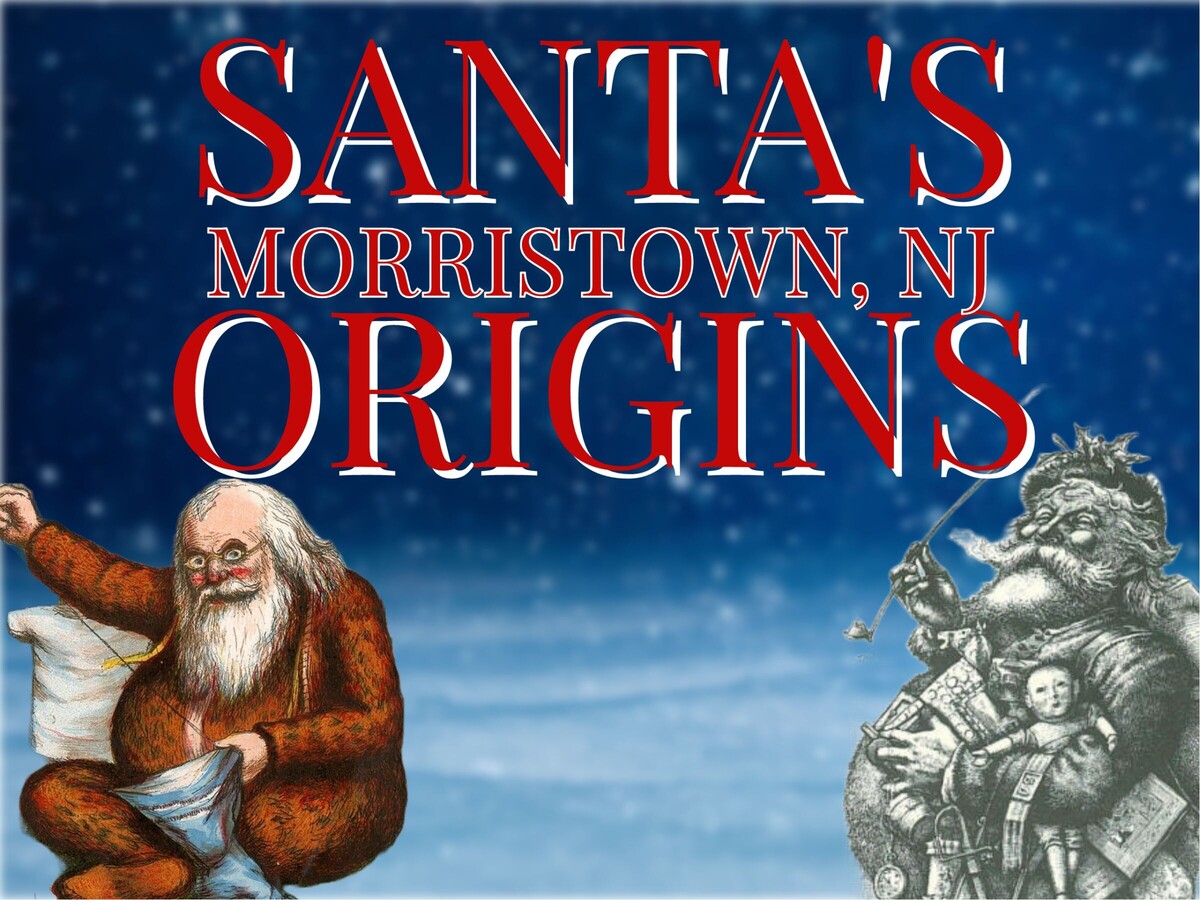
It may surprise you, but the jolly gift-giver we know today was heavily influenced—and largely defined—by an illustrator who lived and worked in Morristown, New Jersey.



 Where did Santa Claus Come from? Why, Morristown, New Jersey, in fact!
Santa Claus traces his origins to the legend of Saint Nicholas, a Christian bishop believed to have lived from around 270 A.D. to 343 A.D. in Patara, a city in what is now modern-day Turkey (near Myra, where he later served as bishop).
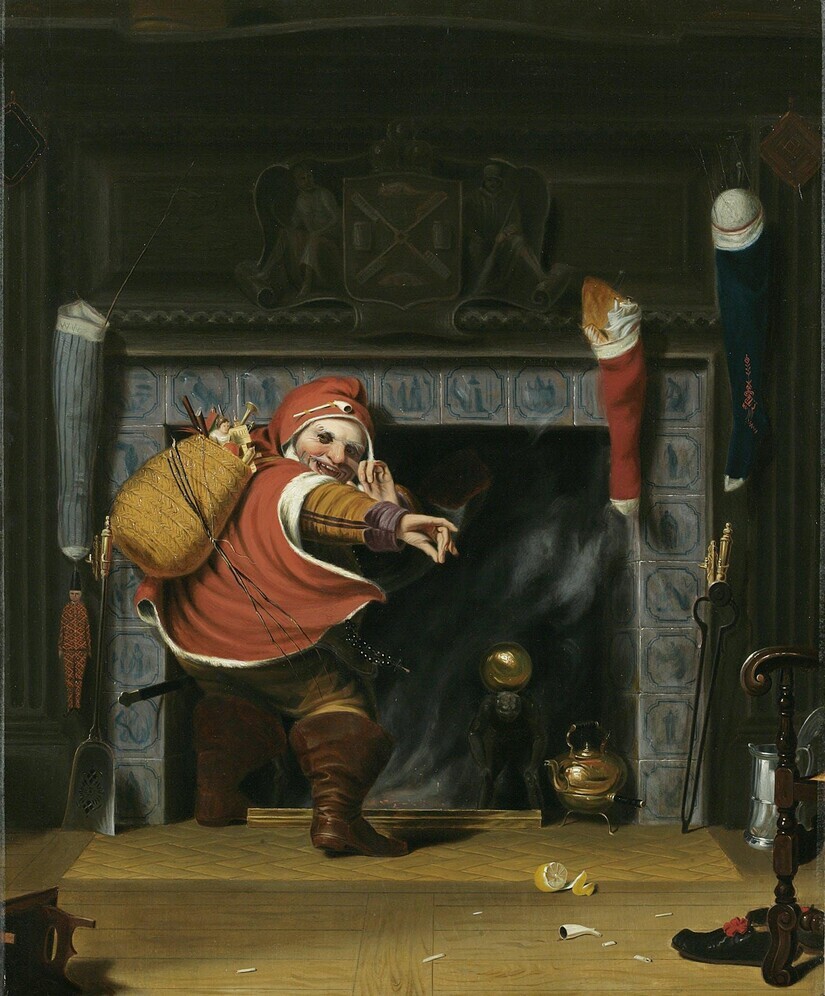
 This image of St. Nick preserves his history as a bishop who gives gifts to good children in stockings hung by the chimney.
St. Nicholas became known for his deep piety and generosity. According to legend, he gave away his inherited wealth and traveled the countryside helping the poor, the sick, and the vulnerable. Over time, he came to be regarded as the protector of children and sailors.
St. Nicholas is believed to have died on or around December 6, a date still observed in many parts of the world as the Feast of St. Nicholas, commemorating his life and legacy.
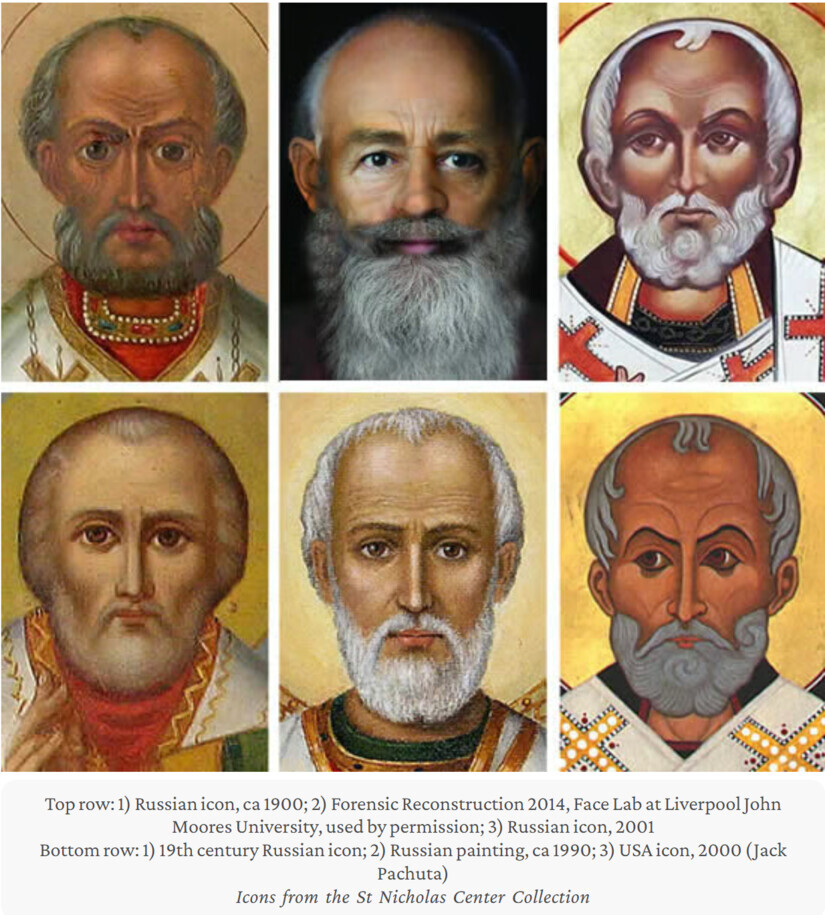 St. Nicholas Center Collection
British forensic anthropologist Caroline Wilkinson has led efforts to reconstruct what St. Nicholas may have looked like using forensic facial reconstruction techniques based on skeletal remains attributed to him.
These reconstructions depict a man with Mediterranean features, a broken nose (likely from persecution-related injuries), and a strong build—far removed from the rotund, red-suited figure we recognize today.
In 1773, a New York newspaper reported on Dutch families in the region gathering to celebrate the Feast of St. Nicholas. The Dutch referred to him as Sint Nikolaas, or Sinter Klaas for short—a linguistic stepping stone toward “Santa Claus.”
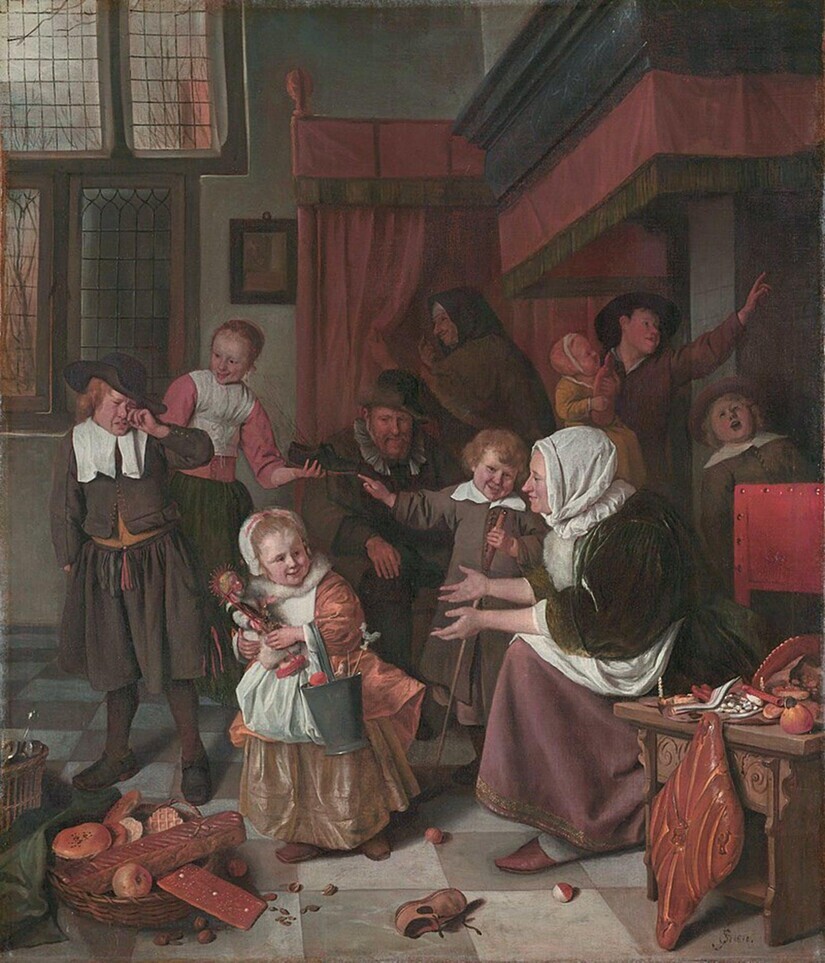 Dutch master painter Jan Steen portrays a family celebrating the Feast of St. Nicholas.
Many customs associated with Christmas in America developed from Dutch, German, and English traditions, with St. Nicholas at the center of gift-giving folklore.
Stockings hung by the fireplace, festive meals, fireside gatherings, and gift exchanges became increasingly popular during the 19th century. While A Christmas Carol by Charles Dickens helped popularize Christmas imagery, Dickens drew heavily from earlier traditions already present in British and American culture.
One of the most influential figures in shaping America’s vision of Christmas was Washington Irving, whose The Sketch Book of Geoffrey Crayon portrayed Christmas as a warm, nostalgic holiday filled with feasting, decoration, and communal joy. Irving also introduced the idea of St. Nicholas flying over rooftops—an image that would soon evolve further.
 L: Merry Old Santa Claus, Harper’s Weekly, Jan. 1881; R: “Merry Christmas to all, and to all a good night,” Harper’s Bazaar, Jan. 1879. Above (right) is an illustration by Nast where Assumption Church, Morristown Baptist Church, Methodist Church, St. Peter’s Church, and the Presbyterian Parish House can be seen in the backdrop of a flying Santa Claus.
The modern image of Santa Claus—the jolly, bearded man in a red suit, traveling by sleigh pulled by reindeer, delivering gifts through chimneys—owes its most enduring form to Thomas Nast (1840–1902).
Nast was a German-born illustrator and political cartoonist who later settled in Morristown, New Jersey. Drawing inspiration from European folklore and American traditions, Nast began illustrating Santa Claus in the 1860s, most notably for Harper’s Weekly.
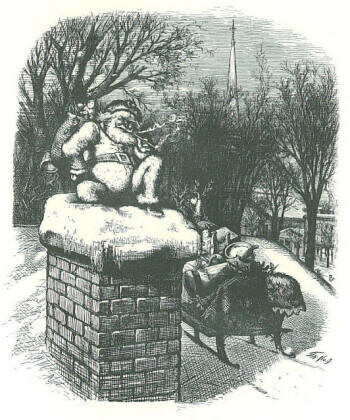 Christmas Eve-Santa Claus Waiting for the Children to Get to Sleep, Harper’s Weekly, January 3, 1874.
In his earliest depictions, Santa appeared as a small, elfin figure dressed in fur. Over time—through decades of illustrations—Nast transformed Santa into the larger-than-life figure we recognize today, complete with a red suit, full white beard, North Pole workshop, and benevolent personality.
Nast continued creating Santa Claus illustrations into the 1880s, often using Morristown as a visual backdrop. In several famous images, local landmarks—including Assumption Church, the Morristown Baptist Church, Methodist Church, St. Peter’s Church, and the Presbyterian Parsonage—can be seen beneath a flying Santa Claus, firmly tying the global icon to this New Jersey town.
Want to understand the news better? Go to TheMinuteman.org to get simple explanations of the trending topics in the news.



Moderate rain, with a high of 67 and low of 42 degrees. Fog in the morning, patchy rain nearby in the afternoon, overcast during the evening, patchy rain nearby overnight.








idiotic, follow the federal law. These are not made up laws, they were passed by Congress.