62° and Sunny
Image

The TRUST Commission says oversight gaps and conflicts of interest have fueled public skepticism—and recommends structural changes inside the state’s law enforcement apparatus.



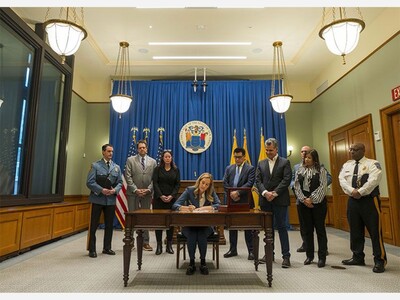
NEW JERSEY - A state commission convened by Attorney General Matthew J. Platkin has released a set of recommendations aimed at reducing public corruption, expanding transparency and improving how New Jersey residents can report suspected misconduct in government.
The report—issued by the Attorney General’s TRUST Commission (Transparency and Reliability Uniting to Secure Trust)—calls for creating a statutory Office of the Inspector General within the Department of Law and Public Safety (DLPS), new measures to address conflicts of interest in public contracting, and additional staffing and funding for the Attorney General’s Office of Public Integrity and Accountability (OPIA), among other changes. The commission was established in January 2025, according to the report, and conducted public listening sessions in Burlington and Essex counties while developing its recommendations.
Although the report addresses state government systems, it comes at a moment when corruption and ethics have remained a prominent part of New Jersey’s political landscape. Former U.S. Sen. Bob Menendez was convicted in federal court and later sentenced to 11 years in prison in a bribery case that ended his Senate career. The commission argues that stronger oversight and clearer reporting pathways are necessary to rebuild public trust.
“I established the TRUST Commission to bring together well-respected and accomplished New Jersey leaders to help us find ways to serve residents and respond to their concerns, because so many people have lost faith in their government and believe that government often does the bidding of the powerful and the privileged, against the will, and at the expense, of the people,” said Attorney General Platkin.
A central recommendation is the creation—and legislative codification—of an Inspector General’s Office within DLPS under the Attorney General’s authority. The commission says the office would focus on investigating “non-criminal fraud, abuse, and unethical behavior,” including matters that may not meet the threshold for prosecution or where evidence is insufficient for criminal charges. The report states that the Inspector General should have authority to conduct civil investigations, issue civil subpoenas, and produce findings that could be referred for prosecution when appropriate.
The report also describes a public-reporting function as part of the deterrence goal, stating: “The work of the proposed Office of the Inspector General would expand the ability of the Department to ensure that the government is worthy of the public it serves, holding it to the highest standards and rooting out wrongdoing even when it does not rise to the level of criminality.”
The commission’s second major focus is conflicts of interest, particularly in the bidding and awarding of public contracts. In the report’s discussion of the issue, it argues that improper bidding, self-dealing, and political deal-making can undermine confidence and impose costs on taxpayers, while also noting concerns from small businesses about overly burdensome procurement requirements.
Among the suggestions: the report recommends the Legislature work with the Office of the Attorney General to craft a new criminal offense for intentionally making inaccurate or misleading statements—or excluding relevant information—with the intent to mislead during the bidding process.
In another passage on the topic, the report states: “Improper bidding on public contracts, self-dealing, and the immense and unjust benefits of political deal-making that line the pockets of the well-connected are pervasive. The public senses it and feels powerless to take any action to stop it.”
The commission also recommends a new Compliance Unit within DLPS, potentially housed within the proposed Inspector General’s Office. The unit would be tasked with tracking and publicly reporting on compliance by individuals and entities regulated or overseen by the department, such as police officers licensed by the Police Training Commission, alcohol licensees, gambling and horse racing entities, and licensed health care professionals.
Separately, the report calls for simplifying and centralizing how residents submit complaints and referrals—an issue the commission says arose in listening sessions, where residents expressed confusion about where to report concerns and whether submissions were being routed appropriately. One proposed step is a “central referral page” that consolidates links, phone numbers and descriptions of reporting options, along with a clearer acknowledgment that a submission has been received.
The commission also recommends upgrading the existing online public-corruption portal maintained by OPIA to make it more understandable to the general public and easier to find from the DLPS website. Among suggested improvements: clearer explanations of acronyms, highlighting that identifying information is not required to submit a complaint, and expanding options for anonymous reporting beyond a web form.
The report recommends increased funding and staffing for OPIA, which investigates and prosecutes public corruption and election crimes and also handles several other high-profile responsibilities described in the report, including fatal police encounter investigations, conviction review, and sensitive internal affairs matters. The commission says resources have not kept pace with the workload and recommends additional staffing, including a community-engagement specialist role.
Another legislative recommendation is that New Jersey enact a criminal statute “akin to” the federal law that criminalizes lying to a government official (18 U.S.C. § 1001). The commission argues the state lacks an equivalent provision and describes what it views as gaps in existing New Jersey obstruction, hindering, and false-report statutes.
Beyond anti-corruption enforcement and reporting, the commission suggests additional steps it says could improve transparency and consumer protection. These include creating a Consumer Product Safety Commission within the Division of Consumer Affairs with authority to conduct product recalls and recall-effectiveness sweeps, and urging the Governor’s Office to establish a working group to add more datasets—such as digitized financial disclosures and contract information—to the state’s Open Data Center initiative.
It also recommends that the Department of the Treasury consider allowing the Attorney General to be the highest-ranking official listed on DLPS letterhead, which the report frames as a way to reinforce public recognition of the Attorney General’s independence.
The report notes that public listening sessions included concerns about abuse in group homes serving people with disabilities, raised by parents of adult children living in those settings. The commission calls for state departments to work together to improve hotline and referral processes so that tips and complaints are handled promptly and routed to the right agency, and describes ongoing interdepartmental discussions to create a more user-friendly website listing available resources.
For residents, the proposals could affect how complaints about public agencies are routed and tracked, and how oversight findings are disclosed—especially in areas where the commission said the public has struggled to understand where to report concerns and what happens after they do.
Bring Meaning Back to the News: Go to TheMinuteman.org to get simple explanations of the trending topics in the news.



Moderate rain, with a high of 67 and low of 42 degrees. Fog in the morning, patchy rain nearby in the afternoon, overcast during the evening, patchy rain nearby overnight.









idiotic, follow the federal law. These are not made up laws, they were passed by Congress.