44° and Clear

Two Visions for America’s Treasury: A Tax Tale of Our Time — and a Test of the Constitution’s Promise


In the grand and often contentious theater of American politics, a new act is unfolding — one that presents not just two economic programs, but two moral compasses aimed in opposite directions. Each lays claim to patriotism, prosperity, and freedom, yet they diverge so sharply that they seem to represent two different countries altogether.
On one side stands the newly signed One Big Beautiful Bill Act (OBBBA) — the crown jewel of President Donald Trump’s economic agenda.
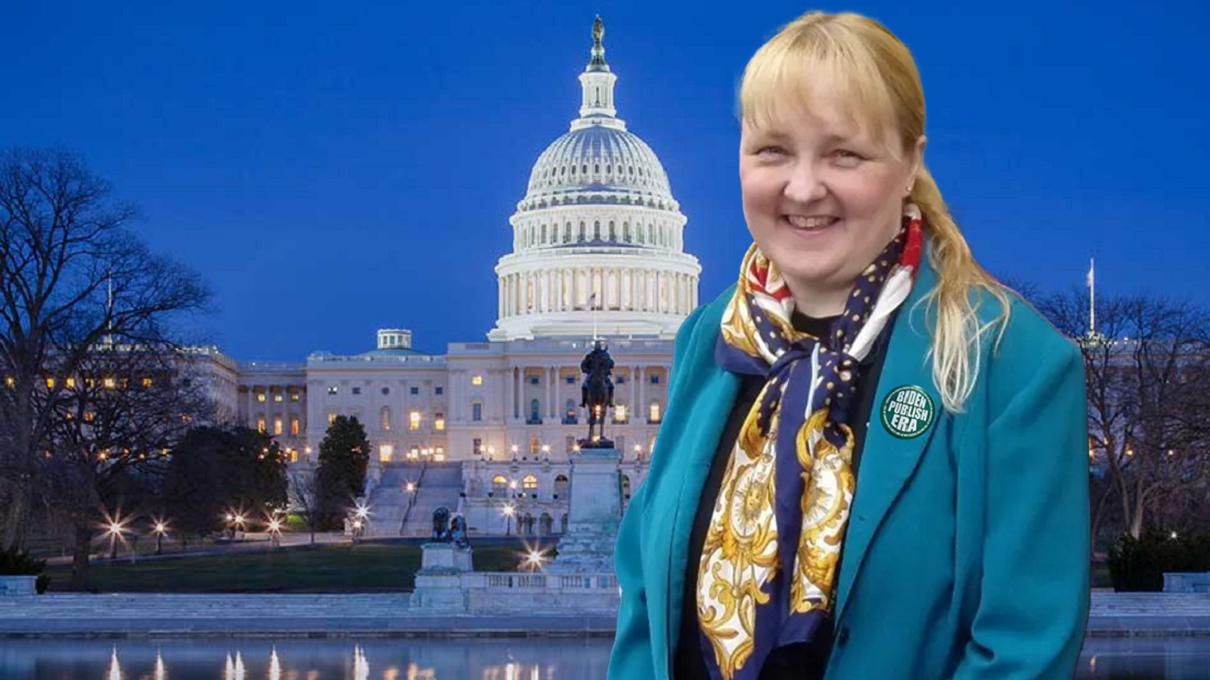
On the other hand, a revival of populist reform from New Jersey Democrat Lisa McCormick, who calls her program “Share Our Wealth & Power.”
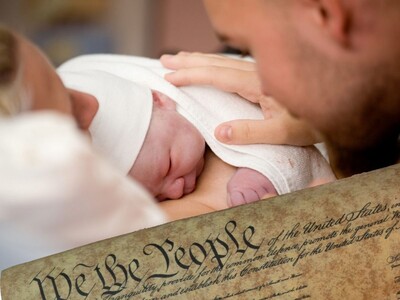
Between them lies a question that reaches back to the Preamble of the U.S. Constitution itself: Which vision better serves the purpose of forming a more perfect Union, establishing justice, promoting the general welfare, and securing the blessings of liberty for ourselves and our posterity?
The OBBBA, signed into law on July 4, 2025, operates on the familiar Republican creed that tax relief fuels growth, and that prosperity at the top eventually lifts all below.
Trump's law makes permanent the sweeping tax cuts of 2017, locking in seven individual income tax rates ranging from 10% to 37%. For the average family, the standard deduction remains at $15,750 for single filers and $31,500 for married couples, with both amounts rising annually with inflation.

The law offers new deductions for overtime pay and tips, a raised SALT cap of $40,000 through 2029, and a modest increase in the Child Tax Credit to $2,200 per child. Seniors get an additional $6,000 deduction. To supporters, it is a triumph of supply-side economics — a promise that the wealth of a few will spill over into the pockets of many.
But McCormick is not persuaded. “Healthcare costs are crushing working families and forcing them to make an impossible choice between food, rent, groceries, and medicine,” she said. “In the richest country in the world, no one should have to live like that.”
Her “Share Our Wealth & Power” plan begins from a very different premise: that concentrated wealth corrodes democracy and violates the nation’s founding principles of justice and equality. The proposal would cap personal fortunes at $100 million, and redirect excess wealth through a progressive tax to fund Medicare for All, tuition-free college, and a $20 minimum wage. For McCormick, this is not just economic reform — it is a patriotic duty.
“Instead of working to ease that burden, House Republicans are making it worse,” she said. “In July, they passed Trump’s Big Beautiful Bill for billionaires and mega corporations that strips 15 million people of their healthcare, cuts over half a trillion dollars from Medicare, and pushes hospitals to close. Then, House Republicans doubled down by passing a temporary spending bill that ignores the expiring ACA tax credits that have helped working families afford their health insurance premiums. And when premiums double, everyone pays the price.”
The Institute on Taxation and Economic Policy (ITEP) found that under the OBBBA, the richest 1% of Americans will receive a net tax cut in 2026 roughly $14 billion greater than the combined benefits for the bottom 80%.
Meanwhile, the poorest 40% are expected to see a net increase in their tax burden.
McCormick’s plan, by contrast, imposes a 90% top tax rate on the ultra-wealthy — a move she frames not as punishment but restoration.
“Trickle-down economics has never worked,” she said. The revenue, she argues, would fund “the things everyone needs” — investments in education, jobs, healthcare, and infrastructure — the literal “general welfare” cited in the Constitution’s preamble.
The contrast between McCormick’s and Trump’s philosophies is as stark as the moral divide between greed and compassion. Trump’s economic doctrine exalts individual gain as the motor of national progress; McCormick’s calls for collective sacrifice as the condition for national survival.
“Time and time again, House Republicans have shown where their loyalties lie: not with working families or the people they serve, but with billionaires, corporations, and Donald Trump,” said McCormick. “America’s families deserve better.”
Her argument draws from the heart of the American creed. The Constitution was written not to sanctify privilege, but to “promote the general welfare.” McCormick contends that a government allowing millions to go without healthcare while billionaires multiply their fortunes is not fulfilling that promise.
“Every single person deserves quality, affordable healthcare,” she said. “I am going to fight like hell to make sure families get the care they need and deserve.”
She warns that Republican governance has strayed so far from constitutional intent that it now threatens the Republic’s stability.
“Republicans control the House, Senate, and Presidency,” McCormick said. “When the government shuts down, Republicans own it because they give Democrats no reason to support their unpopular dismantling of federal agencies and disruption of health insurance that keeps people alive.”
In New Jersey, McCormick’s ideas resonate with those who remember Huey Long’s promise that every man should be a king — not because he owns a palace, but because he is free from want.
Her opponents may deride her as radical; her supporters call McCormick's approach practical.
She argues that her plan would not only end extreme inequality but fulfill the moral mission of the Constitution itself — to secure the blessings of liberty not for the few, but for all.
So the nation now faces a defining choice. Trump’s America bets on the old refrain that prosperity trickles down. McCormick’s America believes it must rise up — built from the labor, dignity, and security of ordinary people.
Between these visions lies a question older than the Republic: Who truly honors the preamble’s charge to “establish justice” and “promote the general welfare”?
The answer, like the Constitution itself, belongs to the people — but Lisa McCormick has made her case clear.
“We have a duty,” she said, “to make sure the promise of America isn’t reserved for billionaires. It’s supposed to belong to everyone.”