44° and Clear

Political sickness in Congress met with Lisa McCormick's proposal for a fundamental cure


A curious and dangerous spectacle is unfolding in the halls of Congress this week, a bit of political theater so detached from human consequence it would be comical if the stakes were not measured in human suffering.
The United States Senate is preparing to vote on two distinct visions for the future of American health care. One proposal, a 32-page Republican bill, would ignore the impending fiscal cliff for millions of families and instead offer payments into Health Savings Accounts—a neat financial gadget roughly as useful as offering a thimble to a man whose house is flooding.
The other, a Democratic bill, would simply extend for three years the enhanced tax credits that have, for the past four years, prevented the health insurance market from reverting to a luxury good.
Here is the punchline, delivered with a straight face: neither measure is expected to pass.
They are props in a debate where the only guaranteed outcome is paralysis. Meanwhile, the clock ticks down to a deadline with the subtlety of a time bomb: the end of this year, when the enhanced Affordable Care Act marketplace subsidies are set to expire.
The result is not a mystery; it is a mathematical certainty. For over 24 million Americans—the freelancer, the early retiree, the small business owner, the family straining at the edges of the middle class—the cost of their health insurance premium is poised to more than double.
Let us speak with precision. This is not a matter of political spin. It is arithmetic.
Since 2021, these enhanced credits have capped what people pay for a benchmark insurance plan at a percentage of their income. When they vanish, the cap rises, and for many, it vanishes entirely.
According to the nonpartisan KFF, the average subsidized enrollee, who paid $888 for the year in 2025, will pay $1,904 in 2026. That is a 114% increase.
A single person making $28,000 will see their annual premium jump by $1,238. A 60-year-old couple with an income just over $85,000 will be hurled off the subsidy cliff entirely, facing a premium increase of over $22,600—transforming health insurance from a manageable burden into a quarter of their entire annual income.
The Republican proposal moving through the Senate this week is a study in deliberate irrelevance. At 32 pages, it does not address these expiring credits.
It is a sideshow, a legislative feint that offers Health Savings Account deposits to some while the foundational cost of care itself skyrockets for all.
It is the equivalent of a town offering coupons for sandbags after voting to demolish the levee.
The Democratic proposal, by contrast, addresses the crisis directly but lacks the votes to overcome a filibuster.
So the stage is set for a classic Washington tragedy: a performance of principle ending in predictable failure, with the audience left to pay the ruinous cover charge.
The human calculus of this deadlock is being performed in kitchens and home offices across the country right now.
December 15 is the deadline to choose a 2026 health plan.
Families are forced to gamble. Do they select a plan based on today’s subsidies, hoping Congress acts in a miraculous January lame-duck session to retroactively lower their costs? Or do they assume the worst, downgrading to a cheaper, skinnier plan with higher deductibles, gambling their family’s health against their family’s finances?
Millions, experts warn, will simply drop coverage altogether, calculating that the premium is a bill they cannot pay. The Urban Institute estimates 4.8 million more people will be uninsured.
This is not an act of God or an unforeseen economic shift. It is a manufactured crisis, engineered by political brinkmanship and a stubborn refusal to govern.
The enhanced subsidies worked. They more than doubled marketplace enrollment. They provided stability. Their expiration is a conscious choice.
The Republican logic appears to be that of a medieval barber, believing that by draining enough blood from the patient, the humors will rebalance. The Democratic position, while aligned with the immediate need, is powerless to stop the bleeding.
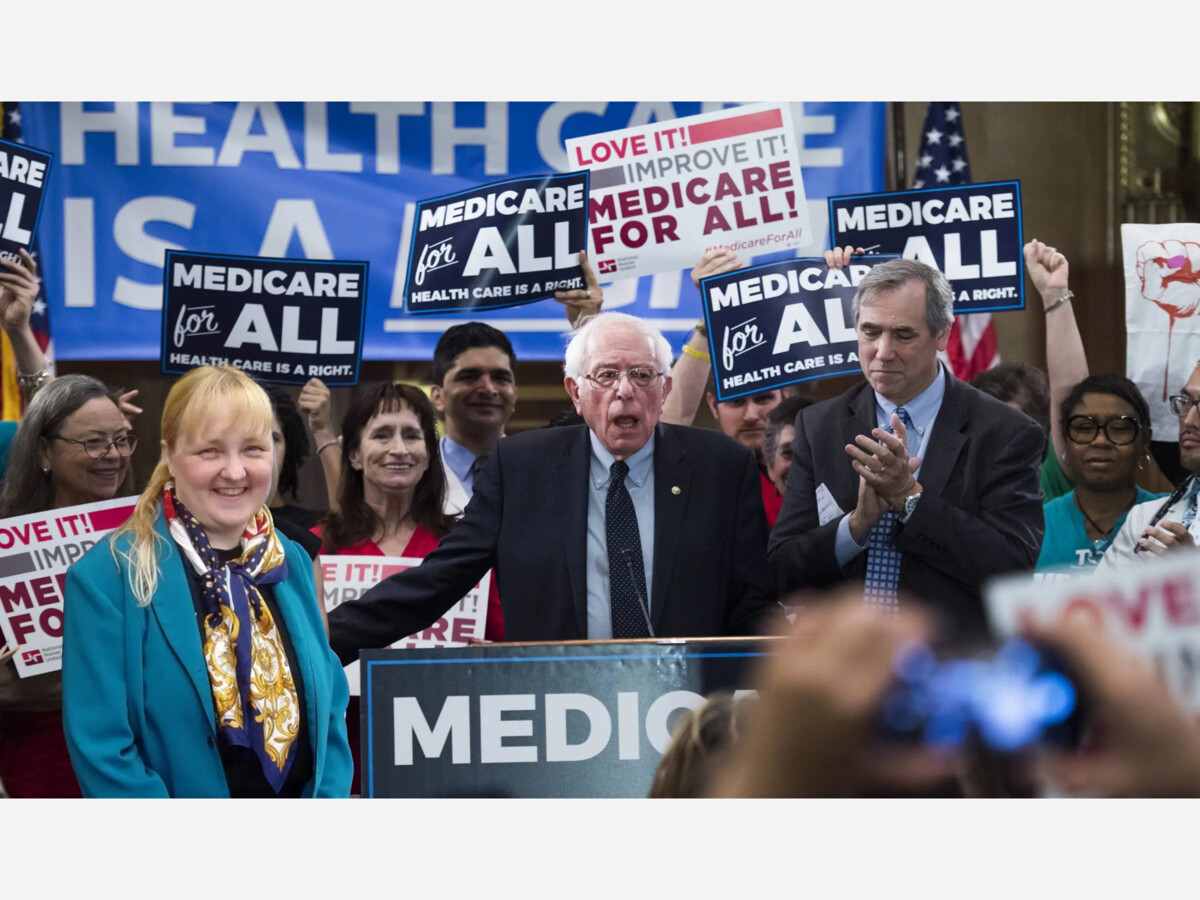
In the shadow of this fracas, voices like progressive activist Lisa McCormick shout for a more fundamental cure: a Medicare for All system that would sever the link between employment, wealth, and survival.
McCormick posted a petition at https://www.democratsfor.us/m4ap urging Congress to support Medicare for All.
Her petition gathers signatures as a testament to the deep, systemic anger this annual subsidy scramble ignites, but it also advocates the adoption of a plan that costs less than Americans currently spend on healthcare, a notion that should please the most conservative Republican penny-pinchers.
For most Americans caught in this vise, however, such a debate is a distant abstraction.
Their immediate reality is a looming, paralyzing cost, and the deafening silence from a Capitol more interested in political point-scoring than in solving a problem it created.
So, as the votes are tallied this week and both bills fail, remember the numbers: $888 becomes $1,904.
A 6% income bite becomes 25%.
Stability becomes uncertainty.
And the only thing that will have passed is the opportunity to prevent a needless, personal financial disaster for tens of millions of their constituents.
That is not governance. It is a dereliction of duty, performed with a stack of papers and averted eyes, while the price of staying alive quietly soars beyond reach.