39° and Overcast
Murphy Signs Law to Protect Immigrants at Schools, Hospitals, and Courts


New law directs Attorney General to establish protections at sensitive public sites, while separate bills aimed at data privacy and law enforcement restrictions face constitutional and fiscal challenges
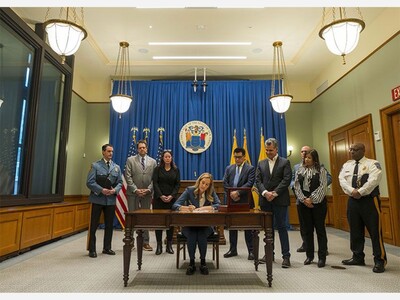
Governor Phil Murphy has signed the Safe Communities Act into law, directing the New Jersey Attorney General to develop statewide model policies that ensure designated “sensitive locations”—including schools, hospitals, courthouses, and places of worship—remain accessible and secure for all residents, regardless of immigration status. The measure took effect immediately following its enactment on January 21.
The new legislation, officially designated A6308/S5036, mandates that the Attorney General, in consultation with stakeholders, publish model protocols to safeguard individual rights and promote accessibility at key public institutions. These sites, which are commonly used for education, health care, legal services, and religious practice, are intended to be free from enforcement-related fears that could deter individuals—particularly immigrants—from accessing critical services.
Under the law, government departments and agencies must adopt these policies, or alternative measures offering equal or greater protections, within 180 days of issuance. Agencies are also required to make the policies publicly available to enhance transparency and inform community members of their rights.
In a statement accompanying the bill’s signing, Governor Murphy emphasized that “public spaces such as houses of worship, schools, hospitals, and courthouses are places of trust that should welcome and safeguard every member of society.”
At the same time, the Governor declined to sign two additional bills aimed at expanding immigrant protections, citing potential legal and financial risks. Both measures were passed by the Legislature during the final 10 days of the session and were subject to a constitutional pocket veto after Murphy opted not to sign them before the session expired.
The first bill, A6309/S5037—known as the Privacy Protection Act—sought to restrict government agencies and healthcare providers from collecting or disclosing sensitive personal information, such as immigration status, Social Security numbers, and places of birth, unless strictly necessary. It also aimed to establish stronger consent and data-sharing policies, particularly in health care settings.
However, according to Murphy, a previously unnoticed drafting error in the bill created a conflict with federal regulations. This discrepancy could have endangered billions of dollars in federal funding, prompting the Governor to withhold his signature. “The only responsible option is to decline to act on the bill at this time,” he said, while urging the Legislature to revise and reintroduce a corrected version in the near term.
The second vetoed bill, A6310/S5038, proposed codifying and expanding the 2018 Immigrant Trust Directive issued by former Attorney General Gurbir Grewal. That directive limits cooperation between New Jersey law enforcement agencies and federal immigration authorities, with the intent of building trust between immigrant communities and police.
Governor Murphy expressed concern that the bill’s additional restrictions—such as removing exceptions for notifying federal authorities of an individual's release from custody—could provoke renewed legal challenges. The existing directive has already survived scrutiny in the federal courts, including the U.S. Court of Appeals for the Third Circuit.
“Renewed litigation would also put our time-tested Immigrant Trust Directive at risk,” Murphy stated, adding that the potential loss of protections due to a judicial reversal posed too great a threat to immigrant communities.
Governor Murphy’s administration has consistently advanced policies aimed at expanding protections for immigrants and integrating newcomers into the state’s economy and civic life. Initiatives have included establishing the Office of New Americans, supporting refugee resettlement programs, expanding access to driver’s licenses and higher education for undocumented residents, and funding legal representation in immigration proceedings.
Despite the pocket vetoes, the Governor reiterated his support for strengthening immigrant protections and encouraged lawmakers to return with revised proposals. The 2026 Fiscal Year budget includes over $13 million in funding for legal services for immigrants, among other inclusion-focused initiatives.