44° and Clear

Electoral equivocation escalates environmental emergency, equals ecological extinction


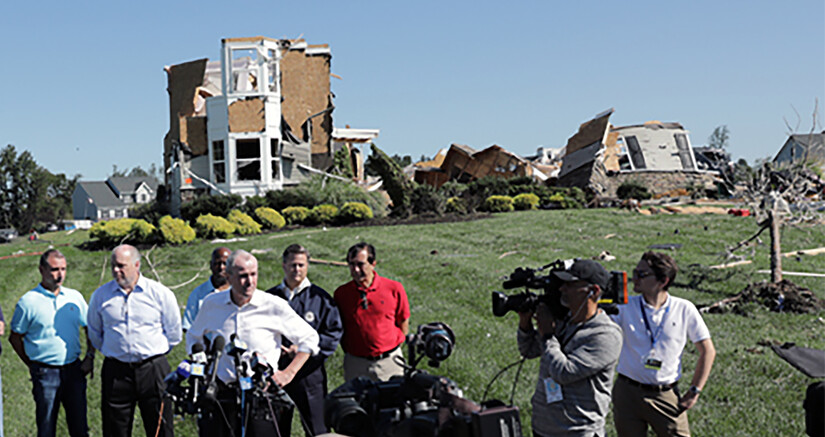
Every modern New Jersey governor, since Robert B. Meyner created Green Acres in 1961, has secured a lasting environmental legacy, but ex-Governor Phil Murphy did not.
In 2021, New Jersey’s leading environmental groups faced a clear choice: endorse an unpopular incumbent with a paper-thin record of green policy or support a challenger who could hold him to the promises he made, ot even defeat him. They chose to issue an early endorsement.
Now, as Murphy headed out of office, the state’s preeminent environmental voice declared that choice a failure of both policy and principle.
The groups—the New Jersey League of Conservation Voters, the Sierra Club’s state chapter, Environment New Jersey, and Clean Water Action—lined up behind Murphy’s re-election.
They cited his pledges: 100% clean energy by 2050, a major offshore wind program, rejoining the Regional Greenhouse Gas Initiative, and landmark environmental justice legislation.
The political math seemed sound. New Jersey is a Democratic stronghold, and Murphy had big money to spend on a campaign and claimed double-digit leads in polls.
Yet the governor defeated Republican Jack Ciattarelli by a mere three percentage points.
His victory was not a mandate but a warning. The environmental community’s unified front, it appears, may have shielded a record already cracking at its foundation.
"The offshore wind program collapsed," saidTittle. "When (Murphy) speaks about climate change, it’s just more hot air."
Instead of a bold demand for action and an alternative that would make them happy, environmentalists placated a politician who replaced promises with platitudes and put a chemical industry lawyer in charge of enforcement.
The only significant Democratic primary challenger who considered taking on Murphy in 2021 was Lisa McCormick, an environmental advocate who had previously challenged U.S. Sen. Bob Menendez.
McCormick stands as an anti-establishment Democrat who once took a surprising 38 percent of the primary vote against disgraced former US Sen. Robert Menendez. She does not trade in the cautious calculus of Trenton but in the language of absolute, uncompromising necessity.
To critics, she is an environmental fanatic because she advocates not merely for a transition away from fossil fuels but for the strategic nationalization of the oil and gas industry, positioning it as critical public infrastructure to be managed in the national interest and phased out with direct accountability.
McCormick called not just for stricter regulations, but for holding corporate leadership legally responsible for the preventable harm caused by pollution, invoking the powerful moral concept of "filicide" to describe the destruction of our shared planetary home.
McCormick's is a vision of definitive action and direct accountability, which would treat the climate crisis with the urgency and moral clarity it demands. Instead of rallying around her, the Wall Street millionaire was embraced and endorsed.
Not surprisingly, Murphy’s green supporters are disappointed.
“Murphy’s environmental legacy: Broken promises and a worse environment,” wrote Jeff Tittel, the longtime former director of the New Jersey Sierra Club, in a sweeping editorial published last month.
The overall assessment is devastating.
Tittel, who led the club when it issued Murphy’s endorsement, now itemizes a “regulatory retreat” that included deep staffing cuts at the Department of Environmental Protection, the gutting of a landmark environmental justice law, the failure to invest in removing lead from school water, the collapse of the offshore wind program, and the privatization of public parks.
“This was not reform,” Tittel wrote. “It was deliberate divestment.”
McCormick's campaign was effectively ended by a paperwork error.
An executive order signed by Murphy allowed petition signatures to be gathered online.
James Devine, a seasoned Democratic strategist working to elect McCormick, submitted names from the wrong list—a mistake he admitted was a “careless” error.
The Murphy administration’s response was to pursue criminal charges. Devine was indicted on three counts. After three and a half years of legal pressure, he pleaded guilty to a single charge, accepting two years of probation.
“I did nothing wrong and put the matter to bed as expeditiously as possible,” Devine said. He suggested the prosecution was political, noting he had made “powerful enemies.” A trial, his lawyers advised, could have dragged on for years with greater risk.
The episode stands in stark contrast to the glowing endorsements of 2021.
While ecology groups praised Murphy’s “vision,” a critic—who played a prominent role in the very first Earth Day, helped write the state law requiring the cleanup of contaminated industrial sites, and worked for the New Jersey Environmental Federation—faced a multi-year criminal prosecution for a ballot access mistake.
Praising Murphy’s vision seems awfully shortsighted.
Tittel’s central question now hangs in the air, unanswered by the groups that endorsed: Why was there no viable primary challenge?
Murphy prioritized corporate profits over the cleanup of New Jersey’s 20,000+ contaminated sites.
"Is the glass half empty or half full? It doesn’t matter. You wouldn’t want to drink what’s in it," wrote Tittle. With all of Murphy’s weaknesses, failures, and betrayals, why wasn't McCormick his cup of tea?
The governor’s narrow win and the subsequent, detailed indictment of his environmental record suggest the political establishment, including its green wing, missed a critical opportunity to demand more.
McCormick would have delivered more, but she was overlooked.
The endorsements, in hindsight, look like strategic blunders that resulted in a state with more pollution, more sprawl, and weaker protections than when he started.
Tittel quoted John Greenleaf Whittier, who played an important role as a poet, as a politician, and as a moral force in the 30-year struggle to abolish slavery, and wrote, “For of all sad words of tongue or pen, The saddest are these: ‘It might have been.’” He did not predict that anyone is going to pay closer attention the next time.