63° and Patchy rain nearby
Image
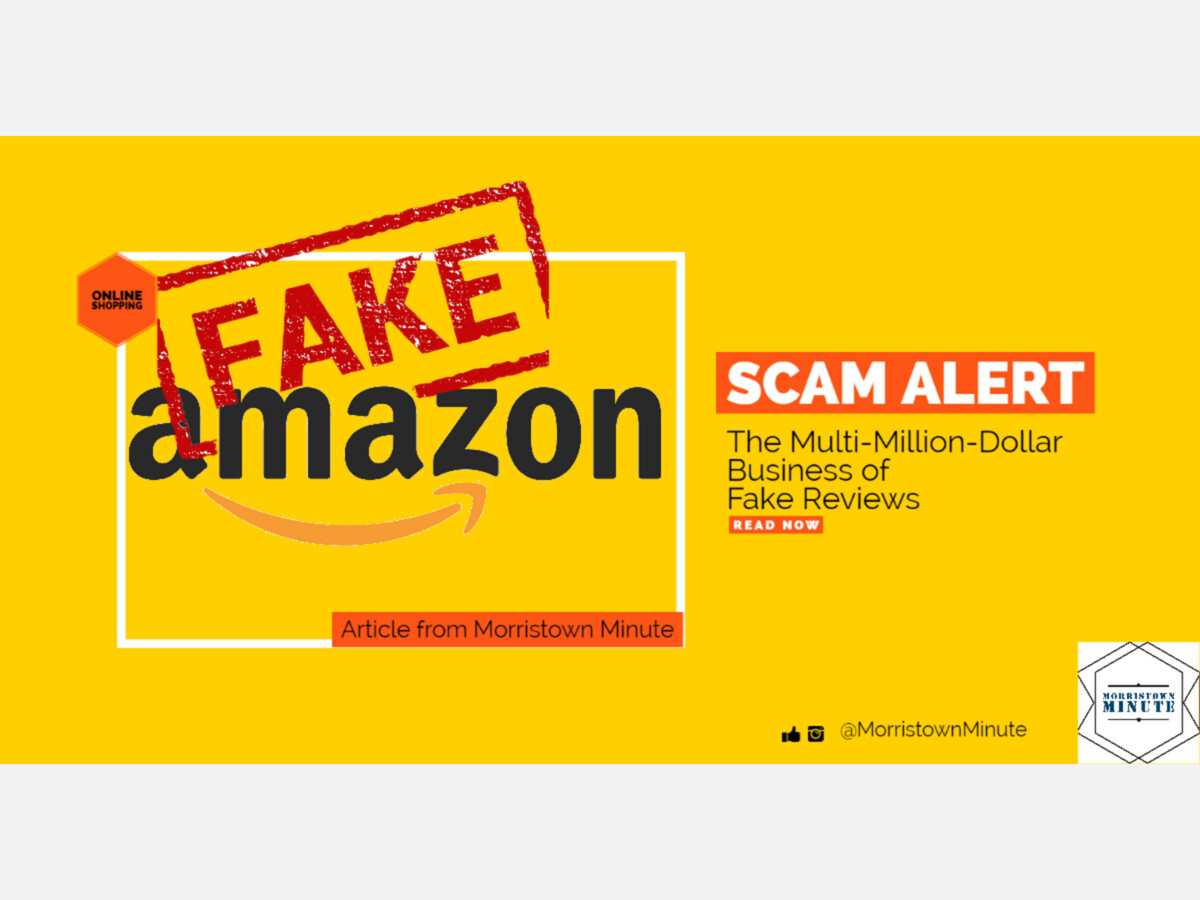



It is common practice to search through Amazon products by filtering out those companies that fail to receive high reviews. Amazon’s service will prioritize the companies and products that receive consistently high reviews and promote them over companies and products with lesser reviews.
In this online shopping world, a positive online review translates to more revenue for the company in question.
Due to the increasing necessity of online reviews, a multi-million-dollar business has grown on the sidelines of the online shopping world focused on creating fake reviews to drive up revenue on products and companies that work to scam buyers out of their hard-earned cash.
Businesses like paidreviews.org and amazonverifiedreviews.com have met increasing legal challenges from Amazon as demand for their services – paid, fake reviews for cash – have grown astronomically over the COVID-19 pandemic.
As more people shop online and rely on the reviews of former shoppers, this business of fake reviewers has grown in profitability.
In 2015, The Guardian reported that Amazon sued over 1,000 ‘fake reviewers’ who Amazon claimed were paid to provide fake reviews on the U.S. version of its site.
The business of fake reviews has also spawned the creation of companies dedicated to helping shoppers identify scams and fake reviews on Amazon.
Fakespot.com, a browser extension that shoppers can use while shopping on Amazon, analyzes Amazon reviews of the products shoppers show interest in and provides a rating on the validity of the company and product reviews.
Fake reviews have become such a massive problem that Amazon called on social media giants to help verify reviewers on their site by connecting one’s Amazon account to a social media account.
Amazon posted a blog post in June of 2021 citing the issue of fake reviews as a reason for social media conglomerates and Amazon to work together to verify users on Amazon’s platform. Amazon called for social media companies to help identify fake profiles and fake reviewers contributing to the increase in dishonest product and company feedback.
Amazon was quick to spread the blame for these “bad actors” across all social media giants saying that in the first three months of 2021 Amazon flagged more than 300 groups to social media companies. The blog post points out that these social media companies “took a median time of 45 days” to shut these fake reviewer groups down.
Amazon did not name any social media site specifically, but there have been reports of thousands of Facebook groups dedicated to “reviews for rewards” comprising of tens of thousands of members.
The business of fake reviews proves to be immensely popular for individual fake reviewers, many of whom are real people with “real” and active social media accounts.
The profitability of these fake reviews has only increased the ubiquity of the problem and driven more people to see “fake-reviewing” as a potential money-making side hustle.
Unfortunately, it is becoming increasingly difficult to hold fake reviewers accountable.
It is a violation of FTC regulations to pay for – or publish your own – fake reviews, punishable by civil penalties such as fines. However, holding the authors of these fake reviews accountable proves to be very difficult.
Many shady businesses will find a way to hide from FTC regulations by enlisting the help of a third party to post reviews for their company and products on Amazon for quick cash.
The Center for Countering Digital Hate focuses on eliminating online hate and misinformation. Their mission also includes the identification and elimination of fake online reviews.
The organization cites how online websites have increasingly been pulling in revenue from advertisements that promote hate and misinformation. Included in the advertising of misinformation is the lucrative “reviews for cash” business that plagues Amazon.
But the problem doesn’t start and end with Amazon.
Millions of online shopping sites are full of advertisements for shady products that haven’t been vetted by the online business. This is most often true of online businesses that use a third-party service to attract and promote advertisements on their sites as a way of seamlessly increasing revenue.
Unfortunately, many of these third-party services have become lazy and disinterested in examining the validity of the advertisements they chose to promote.
As a result, Amazon and many more online shopping sites are full of misleading, hateful advertisements, and fake reviews.
If you plan to shop online this holiday season, protect yourself from fake reviews, misleading advertisements, and hateful messaging by sticking to trusted companies with whom you have personally seen a positive track record.
Consider a browser extension that allows you to identify fake reviews and analyze company information. Visit the Better Business Bureau and look up companies you haven’t heard of before buying products through their site or through Amazon.
Lastly, if you believe you have been scammed, report the scam to the FTC, and if you were using Amazon, report the business to Amazon to help them curb the spread of fake reviews.
Where will you be shopping online this holiday season? Have you been scammed by online stores or on Amazon? Let us know in the comments below.
Follow us on Twitter, Instagram, and Facebook for more local news updates!


Patchy rain nearby, with a high of 77 and low of 53 degrees. Don't forget your umbrella! Sunny in the morning, overcast in the afternoon, clear overnight.





idiotic, follow the federal law. These are not made up laws, they were passed by Congress.