 70° and Sunny



Image
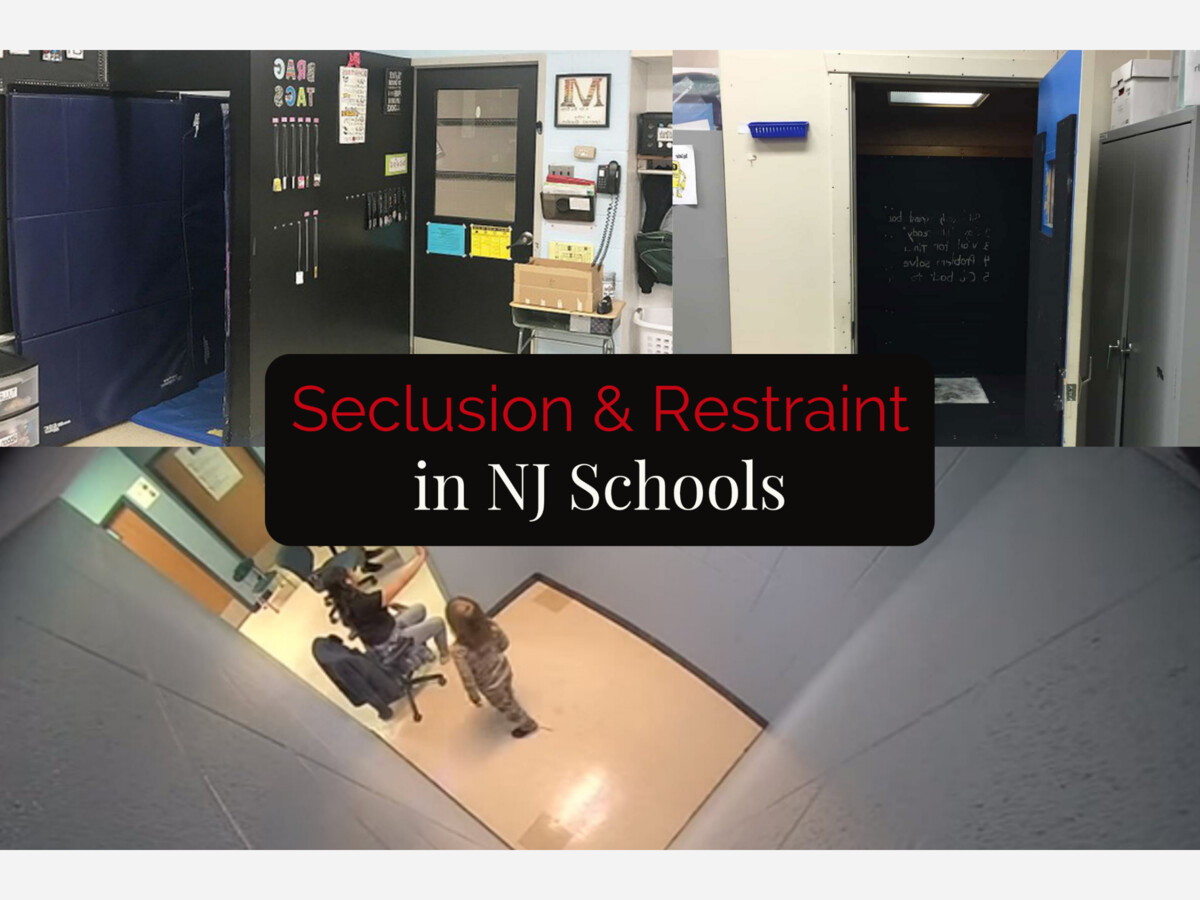
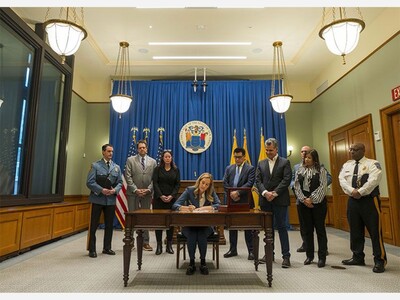
In January 2018, a bill was signed into law by Gov. Murphy establishing requirements over the use of restraints and seclusion on students with disabilities in New Jersey school districts.
The law set forth criteria to which schools must adhere when employing the use of physical restraints and seclusion techniques on students with disabilities.
Under New Jersey law, school districts have the right to physically restrain and even lock up students that exhibit behavior that “places the student or others in immediate physical danger.”
The use of seclusion rooms and restraints on NJ school children with disabilities has become quite controversial. NJ.com today reported on the case of Anna Rivera, who has lost count of how many times her child’s teachers have locked her son in seclusion rooms.
Rivera’s son, diagnosed with autism, has been repeatedly locked away in “seclusion rooms” since Pre-K when he was shut inside the principal’s office after he would not calm down. At age 6, Rivera’s son came home with so many bruises from being roughly restrained by teachers that the family took the child to the emergency room.
The child was locked inside seclusion rooms so many times that his family finally left the school district and enrolled the child in a private school for children with disabilities. No one is able to tell Rivera how much time her son has spent locked away in “seclusion rooms” during his years in the NJ public school system.
This story might sound alarming, but as mentioned above, seclusion rooms and the use of restraints on students are completely legal in the state of New Jersey and have been used for years to isolate “disruptive” students as young as 4 or 5 – six states have banned the use of such techniques outright.
Seclusion rooms are stark, empty, and small spaces where the student sits alone until they’ve calmed down, often locked inside the room – other times teachers or aides hold the doors shut while children pound on the walls inside, scream for the parents, or wet themselves.
These rooms are little spoken of, and rarely seen by parents. The rooms are often converted closets with walls padded with gym mats, and often have names like the Calming Space, the Reflection Room, the Chill Zone, the Blue Room, or the Timeout Booth, to name a few.
These practices sound archaic and cruel, but some educators who face potential violence in the classroom see these practices as a vital necessity. Teachers today have the hardest job in the world, and with a rising student-to-teacher ratio, our educators are often left with no other choice.
Meanwhile, many parents and spirited activists say these seclusion rooms are instilling trauma in New Jersey’s most vulnerable children.
When applying physical restraints, NJ law requires that:
(1) physical restraint is used only in an emergency in which the student is exhibiting behavior that places the student or others in immediate physical danger.
(2) a student is not restrained in the prone position, unless the student's primary care physician authorizes, in writing, the use of this restraint technique.
(3) staff members who are involved in the restraint of a student receive training in safe techniques for physical restraint from a qualified entity determined by the board of education, that the training is updated at least annually.
(4) the parent or guardian of the student is immediately notified when physical restraint is used. A full written report of the incident of physical restraint shall be provided to the parent or guardian within 48 hours of the occurrence of the incident.
(5) each incident in which physical restraint is used is carefully and continuously visually monitored to ensure that it was used in accordance with established procedures.
(6) each incident in which physical restraint is used is documented in writing in sufficient detail to enable the staff to use this information to develop or improve the behavior intervention plan at the next individualized education plan meeting.
NJ schools also have the right to lock children in so-called “seclusion rooms.” School districts that utilize seclusion rooms must ensure that:
(1) seclusion techniques are used on a student with disabilities only in an emergency in which the student is exhibiting behavior that places the student or others in immediate physical danger;
(2) each incident in which a seclusion technique is used is carefully and continuously visually monitored to ensure that it was used in accordance with established procedures in order to protect the safety of the child and others.
(3) each incident in which a seclusion technique is used is documented in writing in sufficient detail to enable the staff to use this information to develop or improve the behavior intervention plan at the next individualized education plan meeting.
While legal, some parents and advocates say that some schools are violating the law by locking children in seclusion rooms for minor offenses, such as refusing assignments, fighting with classmates, or even taking off their shoes in class.
These practices of restraint and seclusion take place with little to no supervision by the state Department of Education, which has no statistical information on which of New Jersey’s nearly 600 school districts utilize seclusion and restraint techniques.
With little supervision, children with disabilities and minority students are being locked away by their teachers at disproportionately higher rates than their classmates.
Although there is limited federal and state data, it’s estimated that New Jersey public schools place at least 1,150 students in seclusion rooms between 2011 and 2017 – indicating the widespread use of seclusion rooms even before the regulatory bill was signed into law in 2018.
91% of NJ students placed in seclusion had physical or emotional disabilities, and 44% of students in seclusion were Black, even though Black students make up 15% of the school-age population.
The use of seclusion and restraint techniques has been rarely discussed and debated in New Jersey. So what do you think? Traumatic or necessary?
Follow Morristown Minute on Facebook, Instagram, and Twitter for more state and local updates.



Patchy rain nearby, with a high of 74 and low of 41 degrees. Mist during the morning, sunny in the afternoon, clear in the evening, patchy rain nearby overnight.







idiotic, follow the federal law. These are not made up laws, they were passed by Congress.